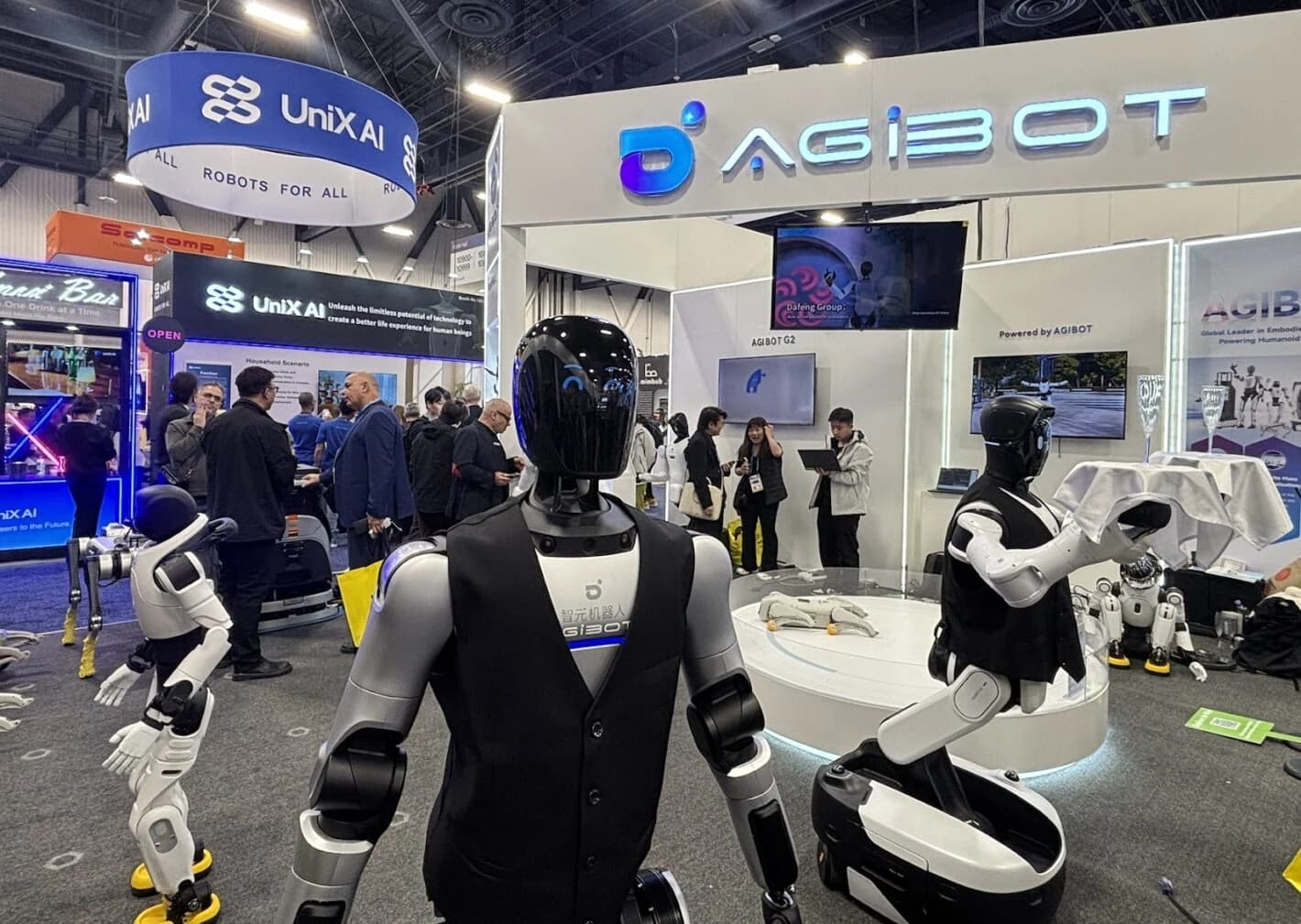
AGIBOT, a robotics and AI company, has launched a public challenge with a total prize pool of $536,000. The target is what the company calls "the hardest problem in robotics": Reasoning to Action.
The challenge was announced via a social media post from Gur Singh, which described the scope as "Reasoning to Action. World M…", suggesting a focus on enabling robots to translate abstract reasoning into concrete, actionable steps in the physical world.
What is the 'Reasoning to Action' Problem?
In robotics, a significant gap exists between high-level task planning ("make a cup of coffee") and the low-level motor control required to execute it (grasping a mug, operating a machine). This disconnect is often called the sim-to-real gap or the embodiment problem. Advanced AI models can generate plausible step-by-step plans, but translating those plans into robust, real-world physical interactions remains exceptionally difficult due to unpredictable environments, physical constraints, and sensor noise.
AGIBOT's challenge appears to be directly targeting this core bottleneck. Solving it would be a major step toward creating general-purpose robots that can understand a goal, reason about their environment, and perform a sequence of novel physical actions to achieve it.
The Challenge Structure
Based on the announcement, the challenge features:
- Total Prize Pool: $536,000 USD.
- Primary Goal: To make demonstrable progress on the Reasoning to Action problem.
The specific competition rules, evaluation metrics, submission deadlines, and the division of the prize fund have not yet been detailed in the initial announcement. Typically, such challenges involve a defined benchmark task or simulation environment where participants submit their AI/robotics systems for evaluation.
Why a Public Challenge?
Public prize competitions have become a popular mechanism in AI and robotics to accelerate progress on well-defined, hard problems. They leverage the broader research community's creativity, often yielding diverse approaches that a single corporate or academic lab might not explore. A substantial cash prize attracts top talent and focuses global effort on a specific technical hurdle.
For AGIBOT, a successful challenge could rapidly advance the state-of-the-art in a domain central to its own product goals, while also positioning the company as a leader and catalyst in the field.
gentic.news Analysis
This move by AGIBOT is a direct, high-stakes intervention into the most persistent problem in embodied AI. While large language models (LLMs) have made staggering progress in reasoning and planning in text, the physical instantiation of those plans is where progress hits a wall. This challenge acknowledges that the next leap in robotics won't come from scaling planning models alone, but from breakthroughs in how those models interface with and control physical systems.
This aligns with a broader industry trend of using grand challenges to solve specific AGI-adjacent problems. We've seen similar structures in areas like protein folding (DeepMind's CASP dominance) and autonomous driving (various DARPA and industry challenges). AGIBOT is applying this playbook directly to the robotics embodiment problem.
The substantial prize amount—over half a million dollars—signals serious intent and is calibrated to attract not just academic groups but also well-resourced startup teams. It creates a focused, time-bound R&D sprint on a problem that, if solved, would have immediate commercial implications for AGIBOT and the entire robotics industry. The success of this challenge will be measured not just by the winning solution, but by whether it produces a reproducible benchmark and methods that the wider community adopts.
Frequently Asked Questions
What is AGIBOT?
AGIBOT is a company focused on developing general-purpose AI and robotics systems. While specific public details on their products are limited, the launch of this high-value challenge indicates their core focus is on solving the fundamental integration of AI reasoning with physical robot action.
How can I participate in the AGIBOT challenge?
The initial announcement is a teaser. Participants should monitor AGIBOT's official channels (likely their website and X/Twitter account) for the forthcoming official challenge rules, which will detail the problem statement, evaluation environment, submission process, timeline, and exact prize breakdown.
What does 'Reasoning to Action' mean technically?
Technically, it involves creating an AI system that can take a high-level goal (e.g., "tidy this room"), perceive a dynamic and unstructured environment through sensors, reason about objects, physics, and sequences, and then output a temporally extended series of low-level motor commands (torques, positions, gripper actions) that robustly accomplish the goal despite real-world noise and uncertainty.
How does this relate to other robotics benchmarks?
Existing benchmarks often test isolated skills (grasping, navigation) or planning in simplified simulations. This challenge appears to aim higher, integrating reasoning, perception, and long-horizon control into a single evaluation, which is significantly more complex and closer to real-world utility.