Industry analyst Carolina Milanesi has raised a red flag on the potential competitive dynamics within Microsoft's ecosystem, suggesting that Anthropic's Claude AI gaining integration into Microsoft 365 would represent a "real threat" to Microsoft's own AI assistant, Copilot.
The warning, shared via social media by analyst Michael Weinbach, draws a direct historical parallel: "We have seen this before. When COVID hit, Zoom won on desktop while Teams won on mobile." The implication is that a superior third-party product (Claude) could capture user preference and market share within a platform (Microsoft 365) even against the platform owner's own solution (Copilot), similar to how Zoom became the dominant video conferencing tool on desktops despite Microsoft's competing Teams product.
What Happened
The core of the analysis is a competitive warning, not an announcement of a confirmed deal. The source is social media commentary from a respected industry analyst (Carolina Milanesi of Creative Strategies) speculating on the business impact of a potential technological integration. The argument is strategic: if Anthropic's Claude—widely regarded as a top-tier conversational AI—becomes accessible within the Microsoft 365 suite, it could siphon usage and strategic value away from Microsoft's homegrown Copilot, which is built on technology from OpenAI and Microsoft's own models.
Context: The Fragile Balance of Platform AI
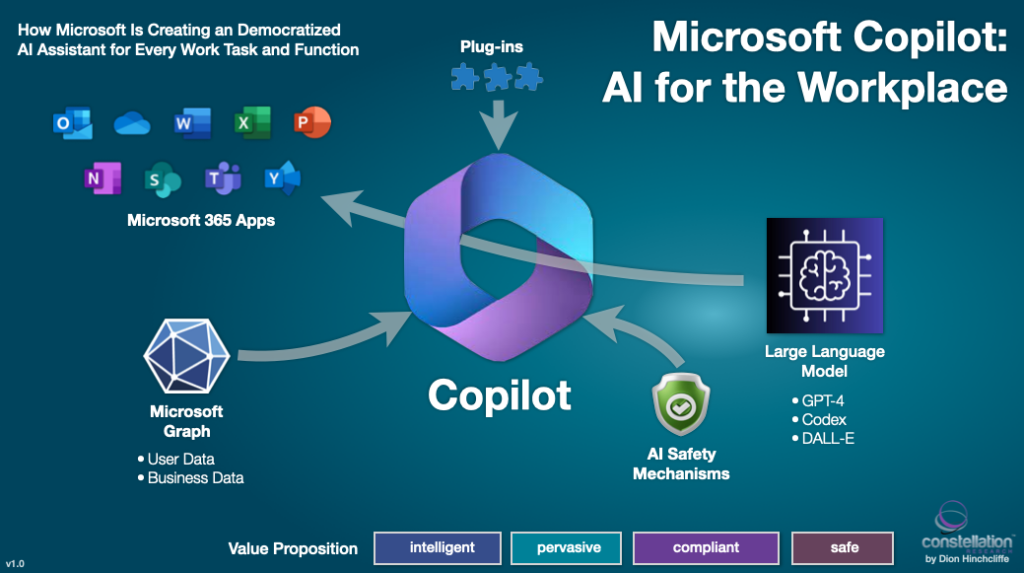
Microsoft's position is uniquely complex. It is a major investor in OpenAI, the primary technology partner behind Copilot, and also a significant investor in Anthropic, having committed billions in 2024. Furthermore, Microsoft has been aggressively embedding Copilot across its 365 suite, Windows, and Edge. The hypothetical scenario of Claude being offered as an alternative or additional AI within 365 creates a channel conflict where Microsoft's investment in a competing AI (Anthropic) could undermine the adoption of its flagship AI product (Copilot).
This isn't merely about features; it's about ecosystem control, user data, and the long-term value of the AI assistant layer. Copilot is designed to be the unified, context-aware AI for the Microsoft ecosystem. A popular third-party alternative operating within that same ecosystem could fragment the user experience and reduce Microsoft's leverage.
gentic.news Analysis
This analyst warning touches on the central strategic tension in enterprise AI for 2026: the battle for the agentic layer within productivity software. As we covered in our analysis of Microsoft's 2025 Ignite announcements, the company is betting its future on Copilot not just as a feature, but as the intelligent fabric of its entire stack. An integrated Claude represents a tear in that fabric.
The historical analogy to Zoom vs. Skype/Teams is apt but incomplete. The Zoom scenario was about a standalone application winning on user experience in a crisis. The Claude-in-365 scenario is about a model competing within a platform. The threat is more subtle: users might default to the AI they perceive as more capable or aligned (Claude has a strong reputation for safety and reasoning), even within Microsoft's walled garden. This could turn Copilot into a default option for some, rather than the option.
This analysis aligns with the ongoing trend of model commoditization and platform aggregation. As we noted in our piece on Google's Gemini Advanced integration into Workspace, the real competition is shifting from whose model is best on a leaderboard to whose model is most seamlessly and usefully embedded in daily workflows. Microsoft's dual investments in OpenAI and Anthropic, as tracked in our AI Investment Tracker, have created a potential internal conflict. If Claude's integration is merely through an API plugin, the threat is minimal. If it becomes a deeply integrated, first-class citizen in 365, Milanesi's warning becomes a critical strategic problem for Satya Nadella and the Copilot team.
The key question for enterprise buyers and developers watching this space is: Will Microsoft allow a true competitive AI agent to flourish within its core productivity suite, or will it use its platform control to ensure Copilot's primacy? The answer will define whether the enterprise AI market remains open and multi-model or consolidates around proprietary, platform-locked agents.
Frequently Asked Questions
Is Claude officially integrated into Microsoft 365?
No. As of March 2026, there is no official announcement or confirmed product integration of Anthropic's Claude AI directly into the Microsoft 365 application suite (Word, Excel, Outlook, etc.). The article is based on analyst speculation about the potential business impact if such an integration were to occur.
How is Microsoft's Copilot different from Claude?
Microsoft Copilot is an AI assistant deeply integrated across Microsoft's products (Windows, 365, Edge). It primarily uses models from OpenAI (like GPT-4) and Microsoft's own in-house models. Claude is a family of AI models developed by Anthropic, known for strengths in reasoning, long-context handling, and a strong constitutional AI safety approach. They are competing general-purpose conversational AIs from different companies.
Does Microsoft own Anthropic?
No, Microsoft does not own Anthropic. However, Microsoft is a major investor in Anthropic, having led a multi-billion dollar investment round in 2024. Microsoft also maintains its deep partnership with and significant investment in OpenAI. This places Microsoft in a unique position of having major stakes in two of the three leading frontier AI labs (OpenAI and Anthropic).
What was the 'Zoom vs. Skype/Teams' analogy about?
The analyst referenced the early COVID-19 pandemic period when the video conferencing tool Zoom experienced explosive growth and became the de facto standard for many desktop users due to its reliability and ease of use, despite Microsoft's competing products (Skype for Business, later Teams) being bundled with its dominant Windows and Office platforms. The analogy suggests a superior product (Claude) can win user preference within a platform even against the platform owner's own solution (Copilot).