What Changed: The Agent Harness Is Now an API
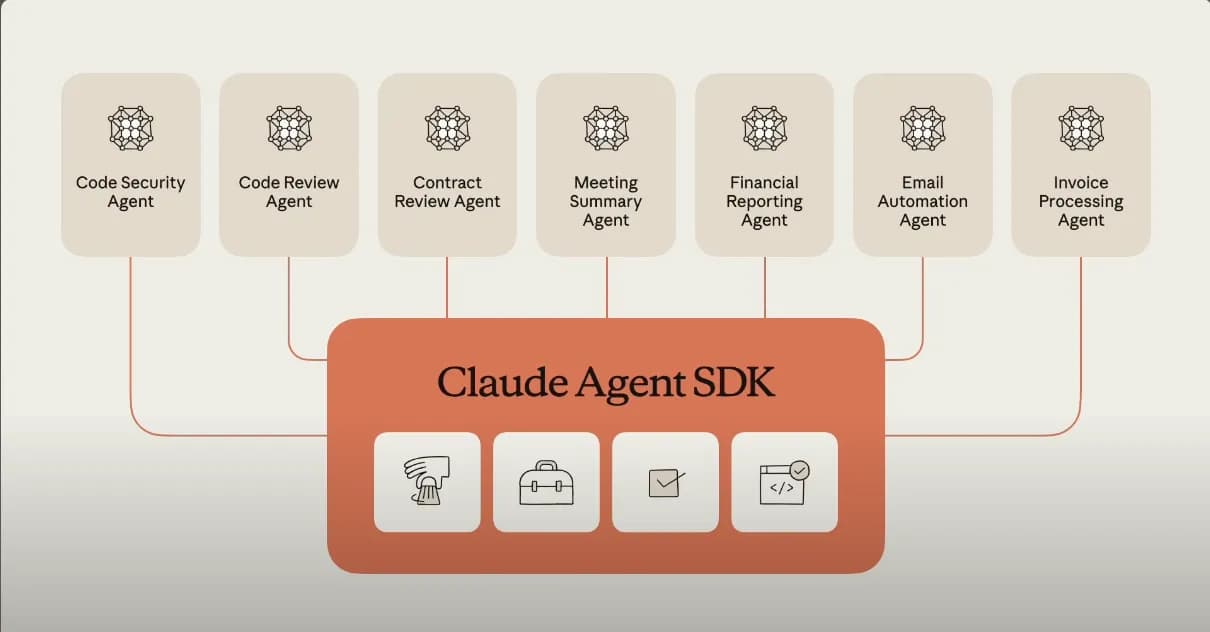
Anthropic just released Claude Managed Agents. This isn't a minor feature update; it's a fundamental shift. The API provides fully managed containers, persistent sessions, built-in tool execution, memory, and long-running async tasks. In short, the entire "agent harness" that startups have been selling for $200-300/month is now a native platform capability.
This follows a blistering 52-day period where Anthropic shipped 74 product releases, including the general availability of Claude Cowork, a plugin marketplace, free memory for all users, and Microsoft 365 integration. The pace is deliberate: they are systematically absorbing the value layers built on top of their models.
What It Means For Your Code
If you're using Claude Code to build applications, your strategy needs to change. The old playbook was to use Claude's raw API and build your own orchestration, memory, and task management on top. That was the "gap." The new playbook is to use the platform's managed capabilities as your foundation.
Stop building the agent runtime. Start building the specific logic, tools, and user experiences that sit on top of a stable, managed agent runtime. Your code should delegate session persistence, tool execution scheduling, and context management to claude.ai via the Managed Agents API. This makes your application simpler, more reliable, and future-proof against the next model update that inevitably includes more native capabilities.
How To Apply This Now
- Audit Your Projects: Look at any Claude Code project where you've written custom logic for chaining calls, maintaining state between interactions, or managing long-running tasks. Flag these as candidates for migration to Managed Agents.
- Shift Your Prompting Strategy: Your prompts for Managed Agents should focus on task specification and tool selection, not session management. Instead of writing prompts that say "Remember the user's name from earlier and use it in this response," you rely on the platform's memory. Your prompt becomes: "Using the user's stored profile, generate a personalized report."
- Build Specialized Tools, Not General Frameworks: The moat is no longer "we have agents." The moat is "we have the best set of tools for [specific industry/use case]." Use Claude Code to develop and refine MCP servers that give your Managed Agents unique capabilities—like connecting to a proprietary internal API or a niche SaaS tool.
Example: Before vs. After
- Before (Fragile): A Python script using the Chat Completions API, with a Redis cache for conversation history, a custom scheduler for multi-step tasks, and error-handling for tool timeouts.
- After (Durable): A frontend that calls a Managed Agent with a specific goal ("analyze this codebase and suggest refactors"). The agent uses its persistent session to remember past analyses, natively calls the File System MCP server you've attached, and runs async. Your code is just the UI and the business logic for presenting results.
The window between "we built this first" and "the platform absorbed it" is shrinking. Your job as a developer is to build with the platform's accelerating capabilities, not in the temporary spaces it hasn't yet filled.
gentic.news Analysis
This move by Anthropic is a direct continuation of the trend we identified in our coverage of Claude's 74 releases in 52 days. The platform is rapidly maturing, moving from a raw conversational model to a full-stack application runtime. Managed Agents represent the formalization of the "Cowork" paradigm—shifting Claude from a tool you query to a persistent entity you collaborate with.
This aligns with, and accelerates, the trend of AI capabilities moving from third-party wrappers into core platforms. We saw this with memory, which went from a startup selling point to a free feature for all Claude users in March. Now, agent orchestration follows the same path. For developers, the lesson is clear: leverage MCP to build deep, specialized integrations that augment the platform's new native capabilities, rather than recreating the capabilities themselves. The next battleground isn't who has agents, but whose agents can do the most useful, specific work.