The Innovation — What McKinsey Reports
In a new article, McKinsey & Company frames a critical evolution in retail technology: moving merchants from passive consumers of data dashboards to active commanders of agentic AI systems. The core thesis is that traditional Business Intelligence (BI) tools, while valuable, often present a deluge of data that requires significant human interpretation and manual action. The next step is to deploy autonomous AI agents that can not only analyze this data but also recommend and, with appropriate governance, execute specific business decisions.
This represents a shift in the merchant's role from analyst to strategist and overseer. The agentic system would handle the granular, repetitive tasks of data synthesis, trend identification, and initial action formulation—such as proposing markdown strategies, optimizing replenishment orders, or reallocating inventory between channels—freeing the merchant to focus on higher-order strategy, creative direction, and exception management.
Why This Matters for Retail & Luxury
The implications for high-value, inventory-intensive sectors like luxury and fashion are profound. The business model is inherently driven by scarcity, seasonality, and rapid trend cycles. An agentic AI system could operate across several high-impact domains:
- Assortment Planning & Allocation: An agent could continuously analyze sell-through rates, regional preferences, and store-level performance to dynamically suggest and execute micro-transfers of stock, ensuring the right product is in the right location at the right time, maximizing full-price sell-through.
- Pricing & Promotions: Instead of a merchant reviewing a dashboard of slow-moving SKUs, an agent could monitor them in real-time, propose targeted markdowns or promotional bundles based on predefined rules and margin guardrails, and even execute the price changes in the PIM/PCM system.
- Supplier & Supply Chain Coordination: Agents could autonomously track purchase order status, anticipate delays using external data, and proactively initiate communications with suppliers or logistics partners to mitigate risk, all while keeping the merchant informed.
- Personalized Clienteling at Scale: While not the focus of McKinsey's merchant-centric piece, the underlying agentic architecture could power hyper-personalized outreach. An agent could analyze a VIP client's purchase history, recent browsing behavior, and new arrivals to autonomously generate and send a curated selection, requesting the relationship manager's approval before sending.
Business Impact
The potential business impact is a step-function improvement in operational efficiency and decision velocity. McKinsey's argument implies significant value capture:
- Reduced Manual Toil: Freeing merchants from spreadsheet gymnastics and dashboard monitoring could reclaim 20-30% of their time for strategic work.
- Improved Margin Preservation: Faster, data-driven reactions to sales trends can minimize costly, panicked end-of-season markdowns.
- Enhanced Inventory Turn: Dynamic allocation keeps inventory liquid and reduces carrying costs.
However, the article is a conceptual framework, not a case study. It does not provide quantified ROI from early adopters. The real-world impact hinges entirely on the robustness, reliability, and governance of the agentic systems deployed. As our coverage has noted, new research reveals failures in production environments not captured by benchmarks, a critical risk for any merchant considering deployment.
Implementation Approach
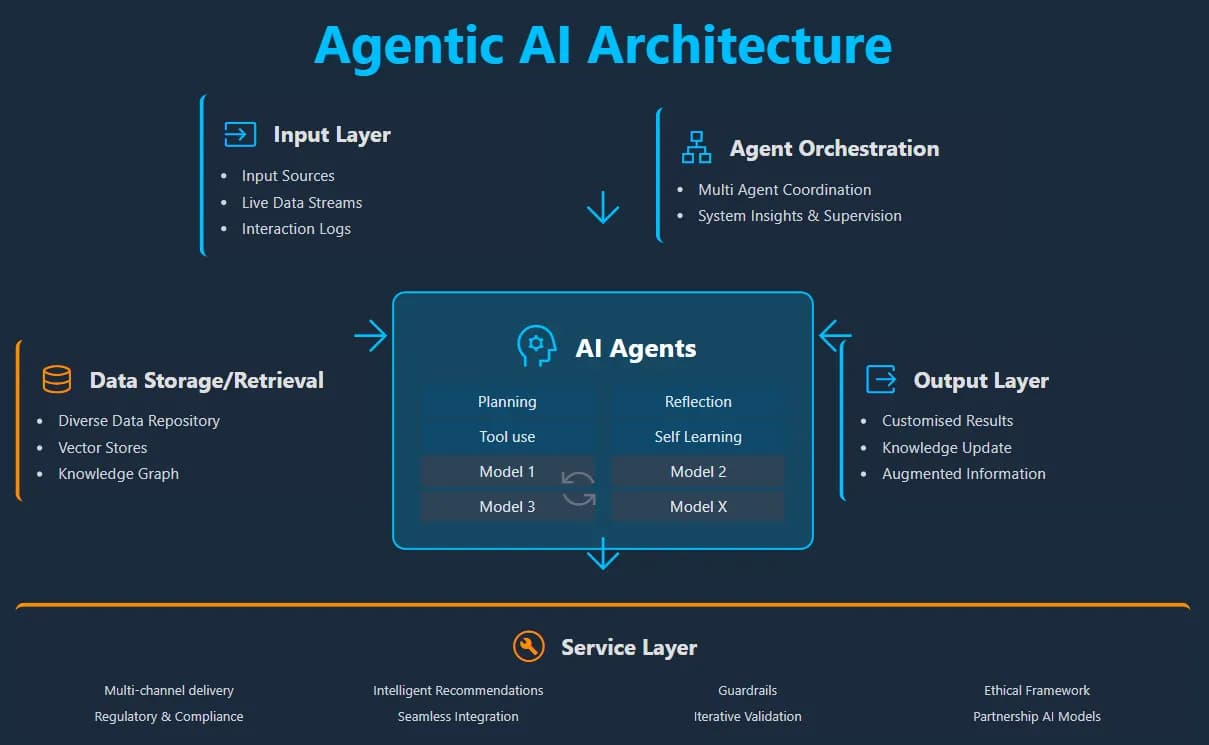
Building a production-ready merchant agent is a non-trivial engineering undertaking. It is not a simple plugin for an existing BI tool. The technical stack likely involves:
- A Foundational LLM: A capable model (e.g., Google's Gemini API or competitors from Anthropic and OpenAI) to reason about unstructured data and generate natural language insights and plans.
- Agentic Framework: Tools like LangChain or AutoGen to orchestrate the LLM's reasoning, break down tasks, and manage memory and tool use.
- Tool Integration: The agent must be equipped with "tools"—APIs and connectors—to interact with core retail systems (ERP, OMS, PIM, CRM, BI databases).
- Robust Orchestration & Observability: A layer to manage the agent's workflow, ensure idempotency, log all actions and reasoning, and provide a clear audit trail.
- A Human-in-the-Loop (HITL) Interface: A critical control layer where the merchant can review, modify, approve, or reject the agent's proposed actions before they are executed in live systems.
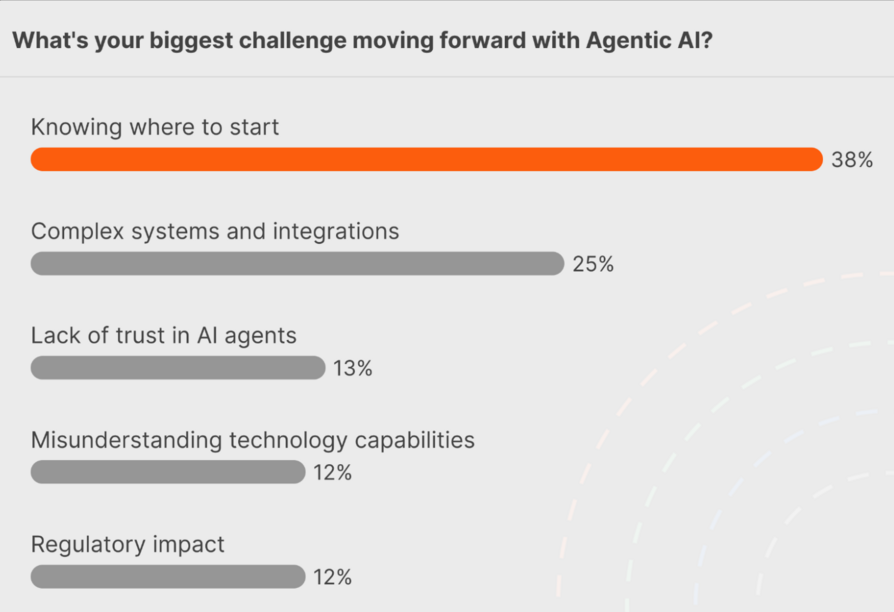
The complexity is high, requiring deep integration with legacy systems and a mature MLOps pipeline. A phased pilot, starting with a single decision domain (e.g., markdown recommendations) is the prudent path.
Governance & Risk Assessment
Delegating decision-making authority to an AI agent introduces novel risks that must be governed:
- Action Integrity: The agent must not make duplicate orders, apply conflicting promotions, or corrupt master data. Action validation and rollback capabilities are essential.
- Bias Amplification: An agent trained on historical data could perpetuate past buying or allocation biases. Continuous monitoring for fairness is required.
- Explainability & Audit: For every action (or recommendation), the merchant must be able to query the "chain of thought"—what data the agent saw and what reasoning it followed. This is crucial for regulatory compliance and trust.
- Maturity & Reliability: The field is rapidly evolving. As noted in our prior analysis of agentic AI systems failing in production, benchmark performance does not guarantee real-world success. These systems can fail in unexpected ways when interacting with complex, real-world APIs and data streams.
gentic.news Analysis
McKinsey's article is a timely articulation of a trend we've been tracking closely. The push toward agentic AI is not happening in a vacuum; it's being fueled by infrastructure investments from major platform players. Google, a key entity in this ecosystem mentioned in 215 of our prior articles, is making massive bets, like its $5B+ Texas data center investment for Anthropic, to power the next generation of AI applications. The tools merchants will use are being built on foundations like Google's Gemini API and the open-weight Gemma 4 family.
This conceptual shift aligns with broader industry projections, such as Gartner's forecast that 40% of enterprise applications will feature task-specific AI agents by 2026. For luxury retail, the competitive implication is clear: the brands that successfully navigate the implementation and governance challenges of agentic AI will gain a decisive advantage in operational agility. They will move faster, waste less, and serve their clients more precisely. However, this follows our recent reporting that highlights the significant gap between research benchmarks and production reliability. Leaders must approach this transition with strategic ambition but operational caution, prioritizing robust oversight and phased pilots over reckless automation.
The race is on, and the prize is a fundamentally more intelligent and responsive value chain.