What Happened
A new technical paper, "MOON3.0: Reasoning-aware Multimodal Representation Learning for E-commerce Product Understanding," was posted to the arXiv preprint server on April 1, 2026. The research addresses a core limitation in using general-purpose multimodal large language models (MLLMs) for product understanding. While MLLMs like GPT-4V or Claude 3 are powerful, they are often used as simple feature extractors, generating a single, global embedding for a product. This approach can lose the nuanced, fine-grained attributes that are critical in retail—think the specific weave of a fabric, the precise hue of a gemstone, or the architectural detail on a handbag.
The authors argue that to truly understand a product, a model must reason about these attributes explicitly. MOON3.0 is proposed as the first "reasoning-aware" MLLM built for this purpose.
Technical Details
The MOON3.0 architecture is designed to solve three identified challenges:
- Salience Dilution in Long Contexts: Long product descriptions and images can overwhelm a model. MOON3.0 uses a multi-head modality fusion module to adaptively integrate raw visual and textual signals, ensuring key information isn't lost.
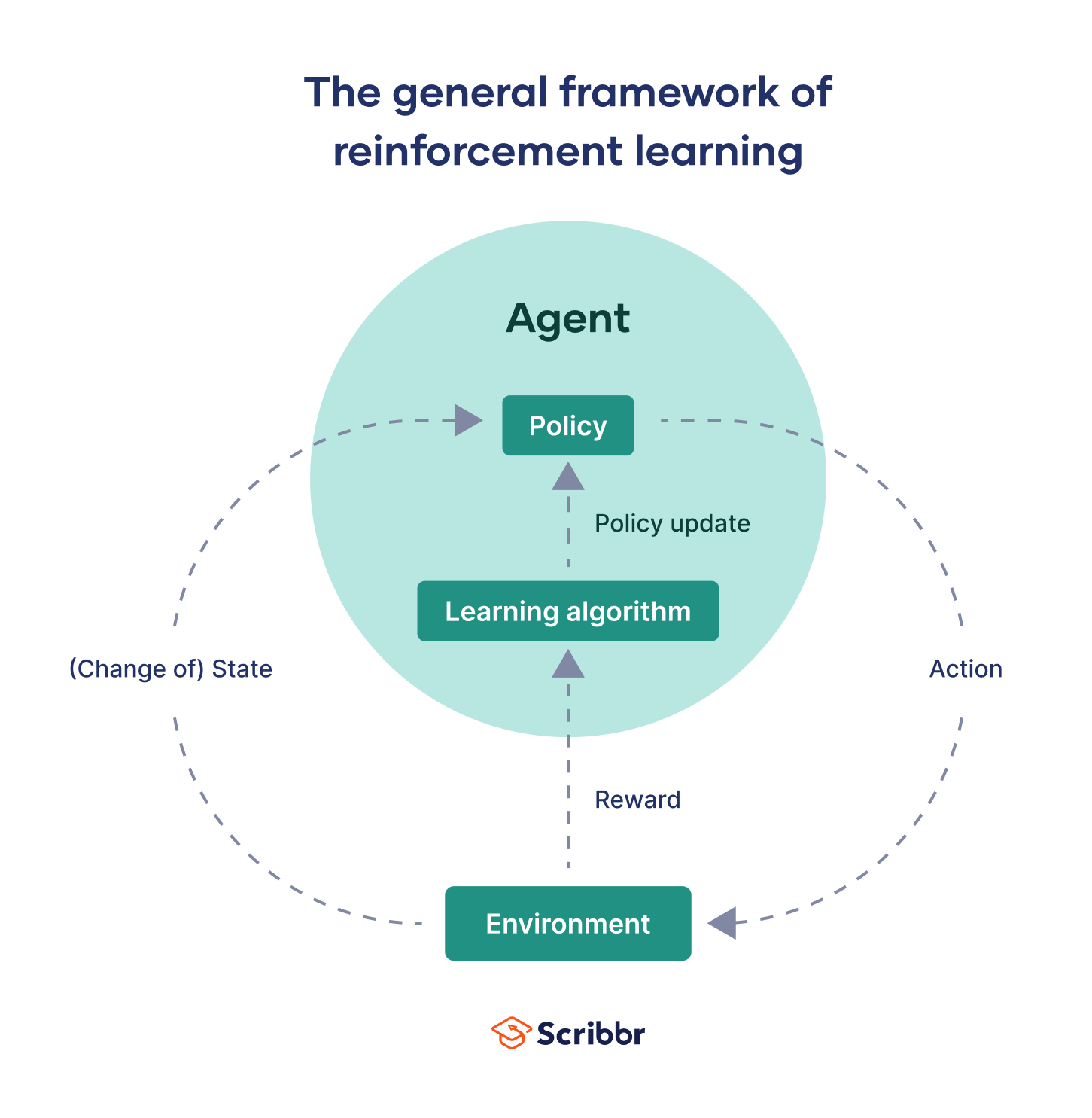
- Rigid Imitation from Supervised Fine-Tuning (SFT): Traditional fine-tuning teaches a model to mimic examples but not to develop robust reasoning strategies. MOON3.0's core innovation is a joint contrastive and reinforcement learning (RL) framework. This allows the model to autonomously explore and reinforce effective reasoning pathways, learning how to deduce attributes rather than just what they are.
- Progressive Attenuation of Details: As data passes through a deep network, fine details can fade. The model incorporates a fine-grained residual enhancement module that progressively injects and preserves local details throughout the forward propagation.
Additionally, the team released MBE3.0, a large-scale multimodal e-commerce benchmark to evaluate performance on tasks like attribute extraction, product matching, and categorization. In experiments, MOON3.0 demonstrated state-of-the-art zero-shot performance on MBE3.0 and other public datasets, meaning it generalized well to new tasks without specific training.
Retail & Luxury Implications
The potential applications for a model like MOON3.0 in high-end retail and luxury are significant, though its readiness for production must be evaluated honestly.

Potential Use Cases:
- Hyper-Accurate Product Tagging & Enrichment: Automatically generating rich, consistent attribute metadata (e.g., "calfskin leather," "pavé diamond setting," "baroque-inspired filigree") from existing product images and minimal descriptions. This could drastically reduce manual cataloging costs and improve searchability.
- Visual Search & Recommendation 2.0: Moving beyond simple pattern matching to true attribute-based reasoning. A customer could search for "a bag with the same structured silhouette as this one but in a pebbled leather," and the system could understand the query's compositional elements.
- Condition Assessment & Authentication Support: For pre-owned and vintage markets, a model trained to reason about material wear, stitching consistency, and hardware patina could provide preliminary condition analysis, augmenting human experts.
- Cross-Modal Catalog Consistency: Ensuring product descriptions accurately match imagery across all channels by identifying discrepancies in attributed features.
The Gap Between Research and Production:
This is a preprint, not a deployed product. The computational cost of the RL framework and the need for large-scale, high-quality training data specific to luxury goods (which are often poorly represented in general e-commerce datasets) are significant hurdles. Furthermore, the MBE3.0 benchmark, while valuable, may not capture the extreme specificity and nuance of luxury attributes. Implementing this would require a major investment in data curation and MLOps infrastructure.
gentic.news Analysis
This paper is part of a clear and accelerating trend on arXiv towards making foundational models more specialized and reasoning-capable for commercial domains. It follows closely on the heels of other recent retail-adjacent arXiv posts, such as the March 31st study on cold-starts in generative recommendation and the March 25th paper challenging the assumption that fair model representations guarantee fair recommendations. The focus has shifted from merely applying general LLMs to rigorously adapting their architectures for sector-specific challenges.

The MOON3.0 approach—using reinforcement learning to cultivate reasoning—aligns with a broader industry movement towards more agentic and strategic AI systems, a topic we covered recently in "Agent Psychometrics: New Framework Predicts Task-Level Success in Agentic Coding Benchmarks." However, it directly contrasts with the simpler, retrieval-augmented approach highlighted in the concurrently mentioned Nemotron ColEmbed V2 paper, which focuses on generating better dense embeddings for visual document retrieval. This presents a strategic fork in the road for retail AI teams: invest in complex, reasoning-native models like MOON3.0 for deep understanding, or leverage more efficient, retrieval-oriented embedding models (Retrieval-Augmented Generation or RAG) for scalable search. The choice will depend on whether the business problem requires deep comprehension or fast, accurate lookup.
Given that arXiv papers mentioning large language models and Retrieval-Augmented Generation are trending sharply upward (12 and 20 mentions this week, respectively), technical leaders must critically evaluate each new proposal. MOON3.0 represents a compelling vision for the future of product AI, but its path to reliable, cost-effective deployment in a luxury context remains a multi-year research and development journey.