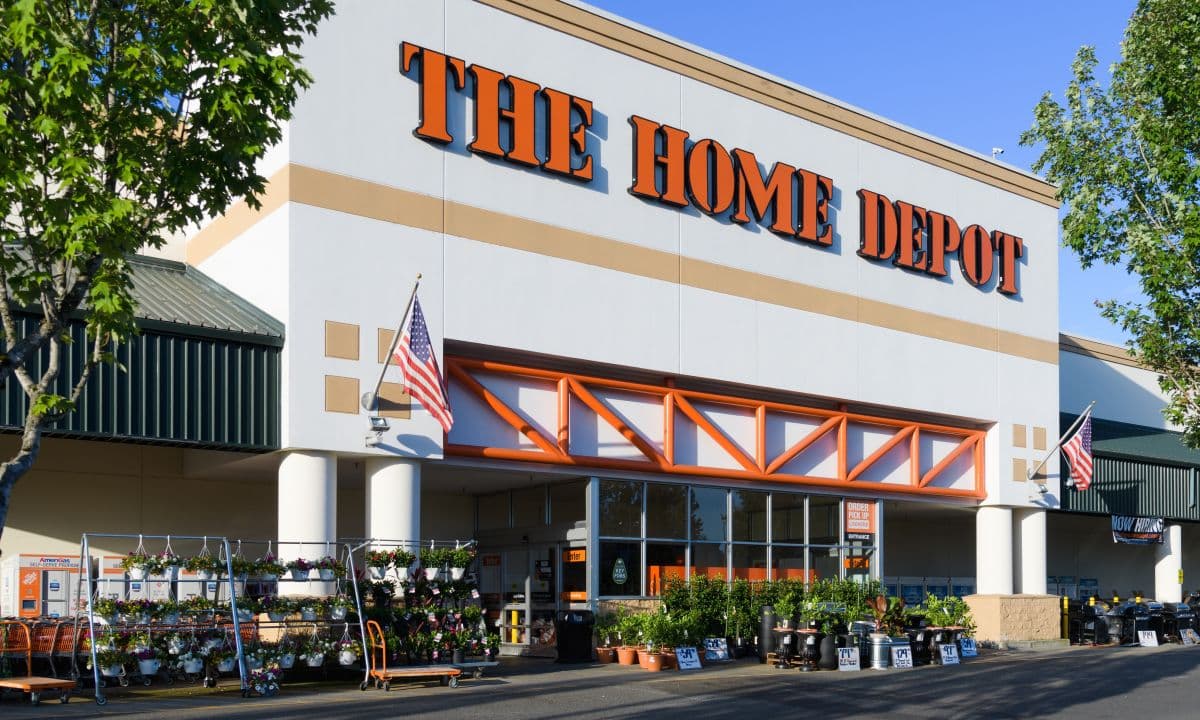
In a significant talent acquisition move, The Home Depot has hired a senior technology leader from Ford Motor Company to spearhead its efforts in scaling agentic AI. This recruitment underscores the home improvement retailer's strategic commitment to moving beyond basic chatbots and predictive analytics toward autonomous AI systems capable of executing complex, multi-step workflows.
The Strategic Hire
While the source article does not name the individual, the move is framed as a poaching of a "tech leader" from a major automotive manufacturer. This pattern of cross-industry talent raids—especially from automotive, a sector with deep experience in robotics, supply chain logistics, and autonomous systems—highlights the premium now placed on executives who can operationalize advanced AI. The hire is explicitly tasked with "scaling" agentic AI, indicating Home Depot is moving from pilot phases to broader enterprise deployment.
What is Agentic AI and Why Does It Matter for Retail?
Agentic AI refers to systems where an AI model is given a high-level goal and the autonomy to plan, execute, and adapt a series of actions to achieve it. Unlike a simple chatbot that answers a question, an agentic system could, for example, handle a complex customer return by checking inventory, initiating a refund, scheduling a pickup, and updating logistics systems—all without human intervention.
For a retailer like Home Depot, the potential applications are vast and operationally critical:
- Supply Chain & Inventory Management: Autonomous agents could continuously monitor stock levels across thousands of SKUs, predict shortages using weather and local project data, and automatically place and adjust orders with suppliers.
- B2B & Pro Services: For its professional contractor customers, an AI agent could manage entire project material lists, coordinate deliveries to job sites, and handle complex bidding and invoicing processes.
- In-Store & Online Customer Experience: Agents could guide customers through multi-phase DIY projects, sourcing materials, providing step-by-step instructions, and troubleshooting in real time.
- Back-Office Automation: Automating intricate processes in HR, vendor onboarding, and loss prevention investigation.
Business Impact: Beyond Efficiency to Strategic Advantage
The business case for agentic AI is not merely cost reduction; it's about enabling new services, capturing customer loyalty, and creating resilient operations. For Home Depot, a leader in a competitive sector with thin margins, the ability to automate complex, variable tasks could significantly enhance its value proposition, especially for its lucrative Pro segment.
This hiring news is a market signal. It demonstrates that leading retailers are now in direct competition with tech and automotive giants for the same scarce AI leadership talent. The goal is to build a durable operational advantage that is difficult to replicate.
Implementation Approach & Complexity
Scaling agentic AI is a formidable technical and organizational challenge. It requires:
- Robust Foundational Models: Leveraging large language models (LLMs) with strong reasoning capabilities, likely through APIs from providers like Google (Gemini) or OpenAI, or deploying open-weight models like Google's Gemma.
- Orchestration Frameworks: Sophisticated software to manage the "workflow" of an agent—breaking down tasks, calling tools (APIs, databases), and recovering from errors.
- Integration Depth: Deeply connecting AI systems to legacy ERP, CRM, and inventory management platforms.
- Guardrails & Governance: Implementing stringent controls to prevent the "AI agent traps" documented by researchers, such as getting stuck in loops or taking unintended actions. As covered in our prior analysis, Google DeepMind has mapped six categories of these potential failures that become critical in production.
The hire from Ford suggests Home Depot values experience in deploying autonomous systems in physically-grounded, safety-critical environments—a relevant background for managing risk in high-stakes retail operations.
Governance & Risk Assessment
Deploying autonomous agents introduces novel risks:
- Operational Risk: An agent making an incorrect, automated purchasing decision at scale could have massive financial consequences.
- Customer Experience Risk: A poorly designed agent could frustrate customers with rigid or illogical processes.
- Security Risk: Increased API and system access points expand the attack surface.
Success depends on a phased rollout with human-in-the-loop oversight, continuous monitoring, and a strong ethical framework for automation. The maturity of agentic AI is advancing rapidly, but as noted in our recent coverage of new research, agentic AI systems are revealing failure modes in production that are not captured by standard benchmarks.
gentic.news Analysis
This move by Home Depot is a concrete data point in the broader trend of Agentic AI moving from research to core enterprise strategy. It follows a series of developments we have tracked closely:
- Industry Validation: This aligns with Gartner's projection that 40% of enterprise applications will feature task-specific AI agents by 2026 and more aggressive forecasts about agent-handled transactions.
- Competitive Talent Landscape: The poaching of talent from Ford illustrates the blurring lines between industries in the AI race. Retail is no longer just competing with retail; it's competing with every sector seeking to digitize physical operations.
- Infrastructure Dependence: To scale these systems, retailers will become increasingly reliant on the AI infrastructure and models provided by cloud hyperscalers like Google. Google's recent activities—from its massive data center investments for AI to the release of the open-weight Gemma 4 model family—are all about enabling this next wave of enterprise AI applications. The choice of underlying model platform (e.g., Google's Gemini API vs. competitors) will be a strategic decision for retailers like Home Depot.
- Learning from Early Failures: As we reported, new research is highlighting how agentic systems fail in real-world production. Home Depot's deliberate hire of an experienced leader from a complex manufacturing domain suggests an awareness that scaling this technology requires not just software expertise, but a systems engineering mindset attuned to real-world chaos and failure modes.
For luxury retail leaders, the lesson is not to copy Home Depot's playbook directly, but to recognize the strategic imperative. The focus for luxury will be on deploying agentic AI in high-touch, high-value contexts—perhaps in personalized clienteling, ultra-responsive supply chain for limited editions, or immersive digital experiences—where autonomy enhances exclusivity and service, rather than replaces it. The battle for the talent and technical architecture to power this future is already underway.