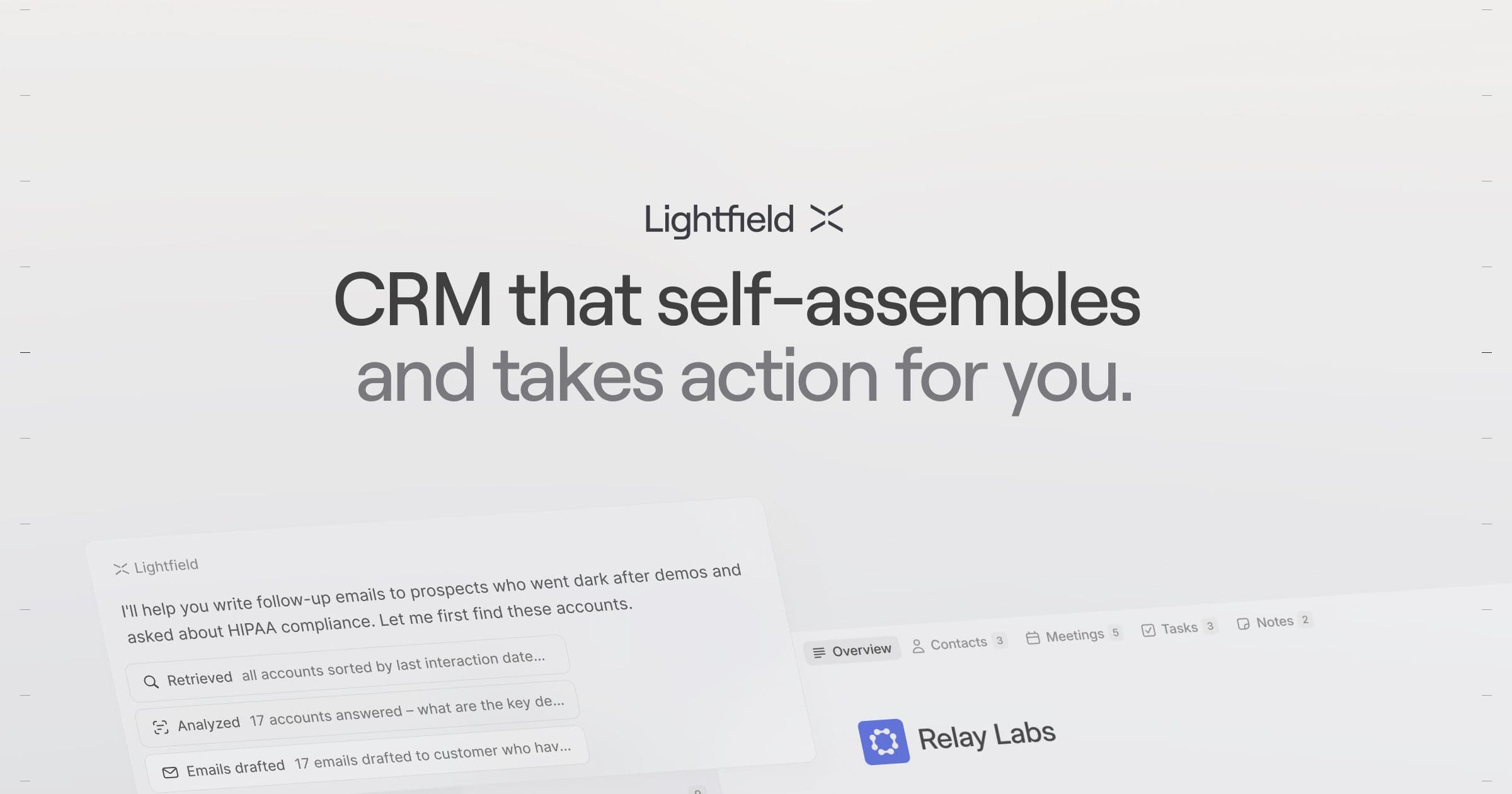
A common sales nightmare: after weeks of negotiations, calls, and emails, you still don't have a clear picture of who the real decision-makers are. This was the exact problem faced by Peter, co-founder of a company using Lightfield CRM, who had six active negotiations and "genuinely had no idea who actually mattered in any of them."
Lightfield's response is a new custom AI feature called 'Skills & Knowledge,' which the company has integrated directly into its CRM platform. According to a user thread, the feature is designed to automatically map out complex client relationships by continuously analyzing all interactions.
What's New: AI-Powered Relationship Mapping
The core promise of the 'Skills & Knowledge' feature is to end the manual, error-prone process of tracking client influence. Instead of sales representatives frantically clicking through tabs during a live meeting or trying to mentally reconstruct relationship maps from stale notes, Lightfield's AI builds and maintains these maps automatically.
The key capability is automatic capture. Every email, call, and interaction with a client is ingested by the system. This data is then synthesized to create a dynamic "Skills & Knowledge" profile for each client relationship.
How It Works: Always-On Context
The technical differentiator, as described by the user, is that these AI skills "always run in the freshest context for every client relationship." This suggests the system performs real-time or near-real-time analysis on communication data, ensuring the relationship map is current and not based on outdated information.
A major pain point the feature addresses is institutional knowledge loss. The system "doesn't rely on any one team member." If a key account manager leaves, the AI-maintained relationship history and influence map remain intact within the CRM, preventing critical information from walking out the door. The user emphasized that with this feature, "the data is always fresh, never stale."
The Practical Impact: From 'A Mess' to Clarity
The user's testimonial outlines a direct before-and-after scenario. Before implementing the custom skill, their client relationship data was "a mess." After building a skill specifically to map client relationships, they gained immediate clarity.
The primary benefit is operational efficiency and strategic insight. Sales teams can enter negotiations or review meetings with an AI-generated understanding of the client's internal dynamics, knowing which contacts have influence, what has been discussed, and the history of the relationship—all without manual data entry or synthesis.
gentic.news Analysis
This move by Lightfield is a direct shot in the AI-augmented CRM wars, a segment that has become fiercely competitive. It follows a clear industry trend where CRM platforms, from giants like Salesforce with its Einstein AI to startups like Clay (which we covered in March 2026 for its relationship intelligence platform), are competing to own the "source of truth" for B2B relationships by automating insight generation. Lightfield's approach of building custom, always-on "Skills" that operate on fresh context is a notable evolution beyond simple interaction logging or static note fields.
Strategically, this aligns with the broader enterprise AI trend of moving from passive data repositories to active intelligence systems. The value is no longer in just storing emails and call notes, but in continuously analyzing that data to provide actionable guidance. This is a core thesis behind platforms like Gong and Chorus.ai, which focus on conversation intelligence. Lightfield is integrating this capability directly into the core CRM workflow, which could reduce context-switching for sales teams.
For practitioners, the key detail to watch is data freshness and autonomy. The claim that skills "always run in the freshest context" implies a move away from batch processing and scheduled reports toward real-time inference. If Lightfield can deliver this reliably without requiring manual triggers, it could represent a meaningful step forward in making AI a seamless, always-on assistant rather than a tool that needs to be consciously queried. The success of this feature will hinge on its accuracy in inferring influence—a notoriously difficult NLP and network analysis problem—and its ability to integrate cleanly with a company's complete communication stack.
Frequently Asked Questions
What is Lightfield CRM's new 'Skills & Knowledge' feature?
It's an AI capability within Lightfield CRM that automatically builds and maintains maps of client relationships. It analyzes all emails, calls, and interactions to identify key decision-makers and the history of a relationship, providing sales teams with constantly updated context without manual data entry.
How does the AI know who 'actually matters' in a client negotiation?
While the specific algorithm isn't disclosed, the feature likely uses natural language processing and network analysis on communication data. It can infer influence by analyzing factors like communication frequency, the direction of requests (who is delegating to whom), sentiment, and the content of discussions across the entire interaction history captured in the CRM.
Does this feature replace the need for a salesperson to take notes?
Not entirely, but it significantly augments it. The AI automatically captures and structures the what and who from digital interactions (emails, calls logged to the CRM). This frees the salesperson to focus on strategic notes, next steps, and qualitative insights, while the AI handles the tedious task of maintaining an accurate record of who said what and when.
How does Lightfield's feature compare to other AI CRMs like Salesforce Einstein?
Salesforce Einstein offers broad AI predictions across sales, service, and marketing. Lightfield's 'Skills & Knowledge' appears more focused on a specific, high-value problem: dynamically mapping B2B relationship influence and providing always-on context. This deeper, specialized focus on relationship intelligence is similar to standalone platforms like Gong or Clay, but integrated directly into the CRM's core workflow.