What Happened
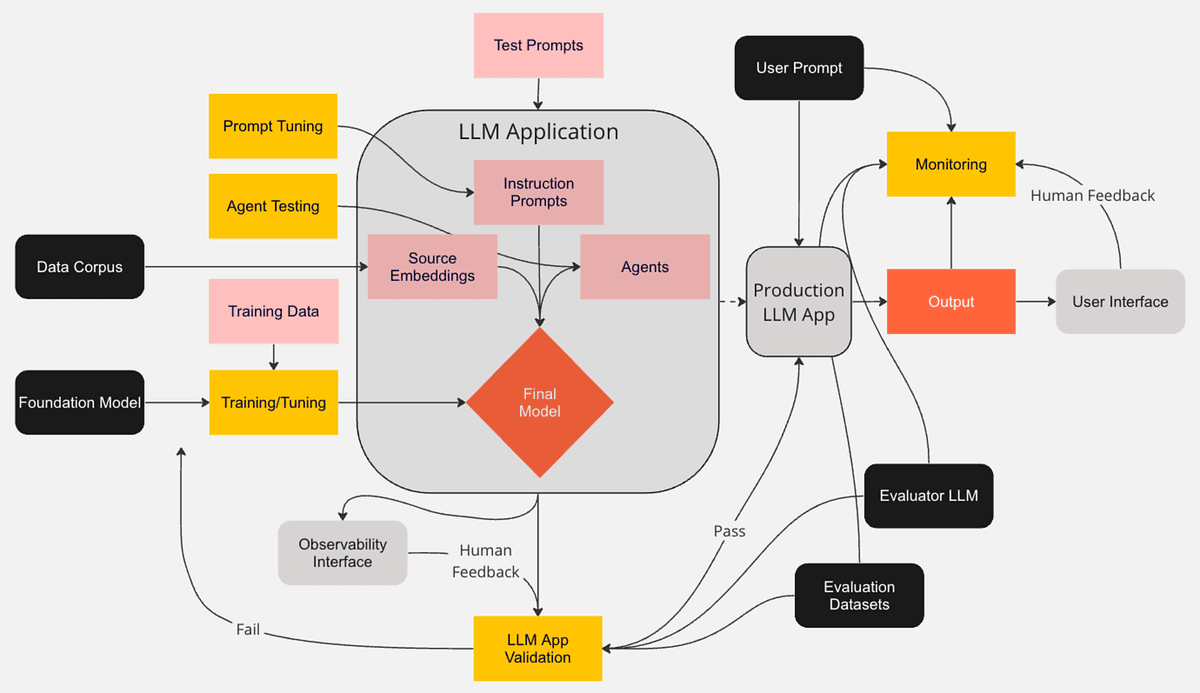
A recent industry analysis, reported by ET CIO, underscores a pivotal shift in the enterprise AI landscape. The core thesis is that for generative AI, particularly Large Language Models (LLMs), to be trusted and widely adopted in business-critical functions, two technical disciplines are becoming non-negotiable: LLM observability and Explainable AI (XAI). These are framed not as optional features but as essential "trust layers" that must be integrated into AI systems.
While the source content is limited, the headline and context point to a clear industry narrative. As companies move from experimental AI pilots to production systems, the focus is intensifying on operational reliability and governance. This is a natural evolution in the technology adoption cycle, mirroring the journey of previous enterprise software paradigms.
Technical Details: The Two Pillars of Trust
1. LLM Observability
This goes beyond traditional application performance monitoring (APM). For LLMs, observability involves tracking a complex set of metrics across the entire inference pipeline:
- Performance & Latency: Token generation speed, time-to-first-token, and overall response time.
- Quality & Drift: Monitoring for prompt drift, response consistency, and degradation in answer quality over time (e.g., using embedding similarity scores against a golden dataset).
- Cost & Usage: Tracking token consumption per query, user, or model endpoint to manage expenses, especially with variable pricing models from providers like Google's Gemini API.
- Safety & Compliance: Logging prompts and responses to detect harmful content, jailbreak attempts, or data leakage.
2. Explainable AI (XAI)
XAI refers to methods and techniques that make the outputs of AI models understandable to humans. For opaque "black box" models like LLMs, this is particularly challenging but vital. Key approaches include:
- Feature Attribution: Highlighting which parts of an input prompt most influenced the final output (e.g., using techniques like SHAP or integrated gradients).
- Counterfactual Explanations: Showing how a slight change to the input would have altered the model's decision or response.
- Retrieval-Augmented Generation (RAG) Attribution: For RAG systems—a common architecture in enterprise AI—XAI means clearly citing the source documents or data snippets used to generate an answer, providing an audit trail.
Retail & Luxury Implications
For retail and luxury brands, where brand equity, customer trust, and personalized service are paramount, these trust layers are not just technical concerns—they are business imperatives.
Scenario 1: High-Value Client Personal Shopping Assistants
An AI concierge for top-tier clients must provide flawless, brand-aligned recommendations. Observability ensures the assistant remains responsive and doesn't hallucinate product details. XAI allows a human stylist to understand why the AI suggested a particular item—"It recommended this jacket because the client's purchase history shows a preference for minimalist designers, and it's currently featured in the Milan lookbook." This builds trust and enables effective human-AI collaboration.
Scenario 2: Automated Customer Sentiment & Trend Analysis
LLMs analyzing social media and customer reviews for emerging trends must be transparent. Observability tracks if the model's "understanding" of sentiment (e.g., towards "quiet luxury") is stable. XAI helps merchandising teams validate insights by seeing the specific customer comments that led to a trend prediction, preventing costly misreads of the market.
Scenario 3: Supply Chain and Sustainability Reporting
Using AI to generate complex sustainability reports from supplier data requires absolute accuracy. Observability monitors for inconsistencies or errors in data synthesis. XAI provides traceability, allowing auditors to verify how figures were calculated and which data sources were used, a critical requirement for regulatory compliance and brand claims.
The gap between this conceptual framework and production is closing. As noted in our prior coverage, Google's recent launch of more cost-effective Gemini API tiers ("Flex" and "Turbo") and its open-source Gemma models lower the barrier to experimentation. However, these core models do not include built-in, enterprise-grade observability and XAI—those layers must be added by the implementing company or through specialized third-party platforms.