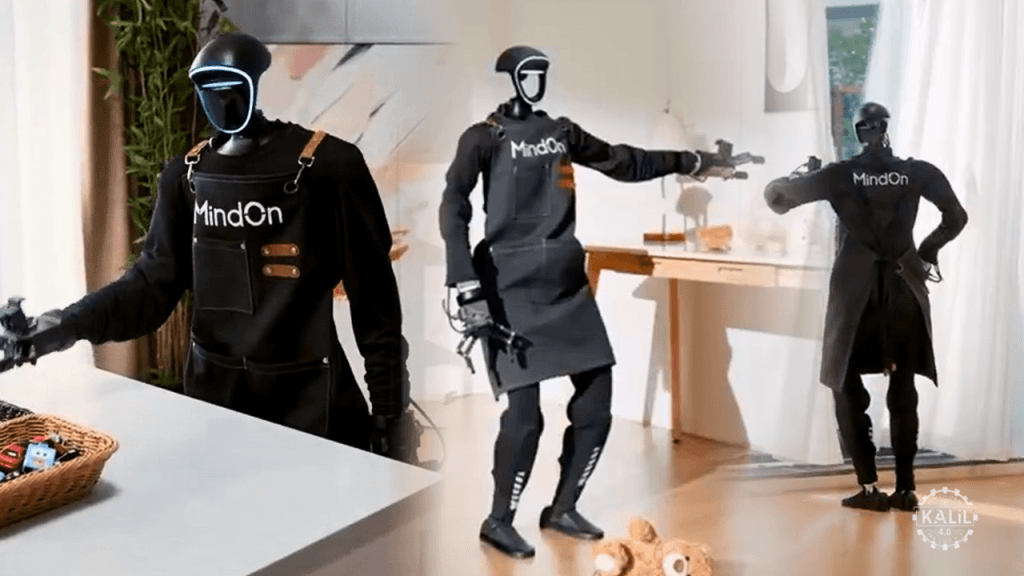
A new humanoid robot designed for the home environment, Neo 1X, made a public appearance at the Abundance Summit, an event hosted by futurist Peter Diamandis. The robot was seen moving autonomously through a crowd and engaging in one-on-one interactions with attendees.
What Happened
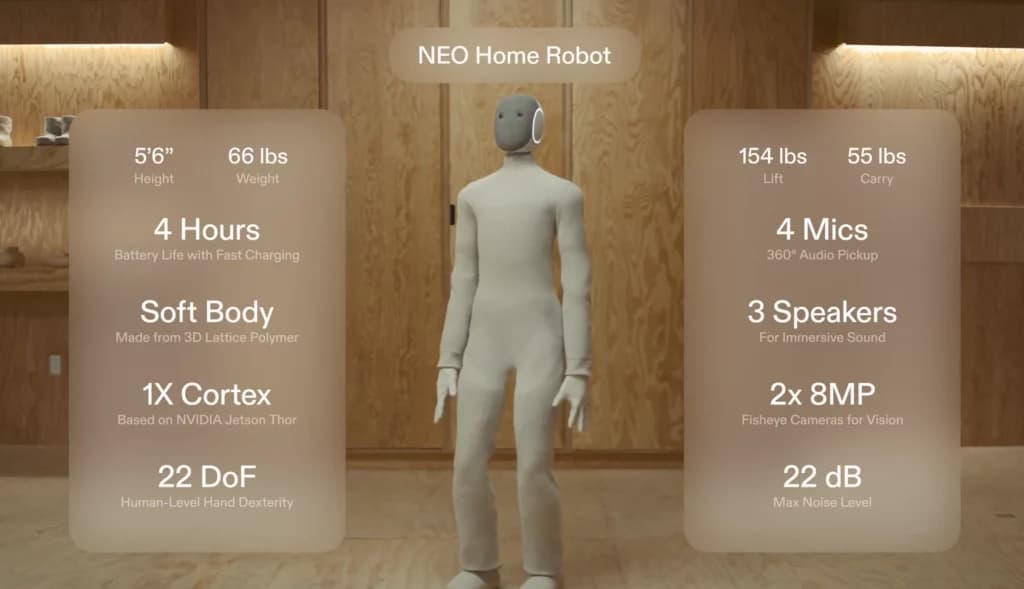
According to a social media post from AI commentator Rohan Paul, the Neo 1X robot was demonstrated live at the Abundance Summit. The key reported specifications are its weight—under 70 pounds (approximately 32 kg)—and its use of actuators for movement. The robot's behavior, navigating a crowded space and interacting directly with people, was a core part of the demonstration. The source frames this as part of a broader industry shift toward building robots intended to safely "coexist" with families in domestic settings.
Context
The demonstration of a functioning, interacting humanoid at a high-profile tech summit is a notable step from prototype to public-facing utility. The explicit focus on the home environment and safe cohabitation distinguishes it from many humanoids targeted at industrial or logistics work, such as those from Tesla, Figure, or Boston Dynamics. The sub-70-pound weight is a critical engineering detail, suggesting a design priority on being lightweight and presumably less dangerous if a collision were to occur, compared to heavier industrial models.
Technical & Market Implications
While the source does not provide detailed technical specs on AI models, compute, battery life, or dexterity, the demonstration implies several capabilities:
- Navigation: Ability to operate in dynamic, unstructured environments (a crowded summit hall).
- Human-Robot Interaction (HRI): Basic protocols for engaging with untrained humans.
- Form Factor: A design trade-off prioritizing weight and safety for home use.
The claim of a "shift toward robots built to coexist safely with families" aligns with increasing investment and research in social and domestic robotics. However, the home remains one of the most challenging environments for robots due to its complexity, variability, and high safety requirements.
gentic.news Analysis
This public demo of Neo 1X is a tangible data point in the rapidly evolving humanoid robotics landscape. While companies like Figure AI (which recently partnered with BMW and raised $675 million) and Tesla are focused on near-term industrial deployment, Neo 1X is targeting a more distant but potentially massive market: the home. This aligns with a longer-term trend we've noted, where advancements in embodied AI and actuator design are enabling a new wave of startups to explore niches beyond factory floors.
The emphasis on lightweight design and safe interaction is a direct response to the primary barrier for domestic adoption: trust. A 70-pound robot is still a substantial object, but it's far less imposing than a 160-pound industrial bot. This focus on coexistence rather than just function is the key differentiator. It suggests Neo 1X's developers are prioritizing social navigation and soft HRI protocols—areas of intense academic research—alongside physical mobility.
However, the path to a useful domestic robot is fraught with unsolved problems. True home assistance requires not just navigation and conversation, but advanced manipulation for tasks like laundry, dishwashing, and tidying—capabilities not demonstrated here. The Neo 1X appearance is a significant PR milestone that validates interest in the category, but the distance between a conference demo and a reliable consumer product remains vast. It places Neo 1X in a race with other domestic-focused efforts, where the winner will be whoever solves the hard problems of cost, generalized manipulation, and robust safety in unpredictable environments.
Frequently Asked Questions
What is the Neo 1X robot?
The Neo 1X is a humanoid robot designed for home environments. It weighs under 70 pounds and uses actuators for movement. It was recently demonstrated moving through a crowd and interacting with people at the Abundance Summit.
Who makes the Neo 1X robot?
The source material does not specify the manufacturing company. The robot was shown at an event hosted by Peter Diamandis, but his direct affiliation with the robot's development is not stated.
How is Neo 1X different from other humanoid robots?
Its primary differentiation is its design focus for domestic, in-home use with an emphasis on safe cohabitation with families. This contrasts with most prominent humanoid projects from companies like Tesla, Figure, and Boston Dynamics, which are primarily targeting industrial, warehouse, or logistics applications first.
What does "under 70 pounds" signify for a home robot?
The low weight is a key safety and practicality feature. A lighter robot is less likely to cause severe injury or damage if it falls or makes contact with a person or object in a home. It also implies design choices for energy efficiency and quieter operation compared to heavier industrial machines.