What Happened
A new technical tutorial has been published on Medium titled "Neural Movie Recommenders with Small & Large MovieLens Data." The article appears to be part of a series ("ML Project #4") and provides practical guidance on implementing neural network-based recommendation systems using the popular MovieLens dataset in both its small (100K ratings) and large (25M ratings) variants.
While the full article content isn't accessible in the provided snippet, the title and context suggest this is an educational resource focused on the implementation details of neural recommender systems rather than presenting novel research findings. The MovieLens dataset has long served as a benchmark in recommendation system research, making this tutorial relevant for practitioners looking to build or understand modern recommendation architectures.
Technical Details
Based on the title and typical implementations in this space, neural movie recommenders typically employ:
- Embedding Layers: For representing users and movies in dense vector spaces
- Neural Network Architectures: Often using multi-layer perceptrons (MLPs) or more sophisticated architectures
- Collaborative Filtering Approaches: Learning patterns from user-movie interaction data
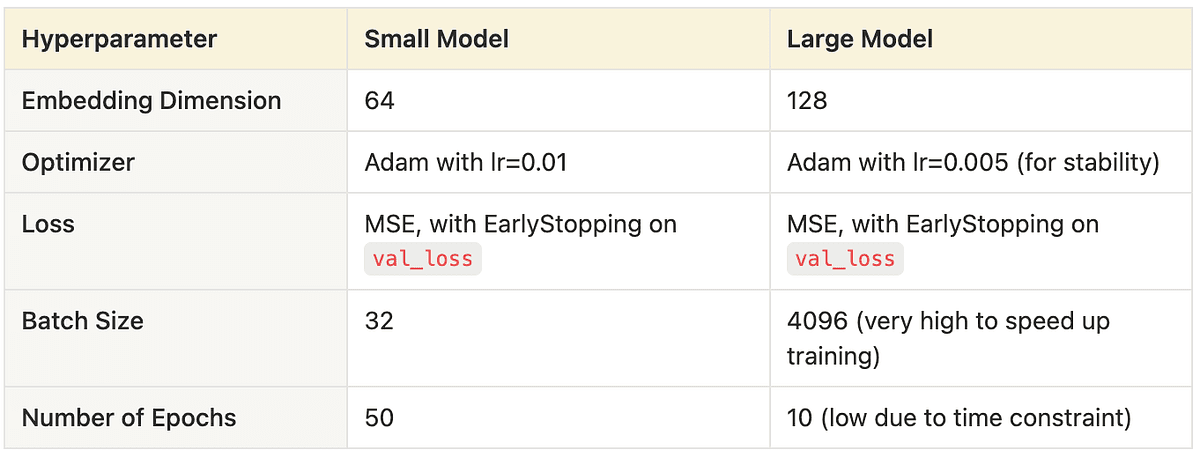
- Scalability Considerations: Different approaches for handling the 250x difference in data volume between small and large MovieLens datasets
These systems differ from traditional matrix factorization methods by using neural networks to learn more complex, non-linear relationships between users and items. The tutorial likely covers practical implementation details including data preprocessing, model architecture selection, training procedures, and evaluation metrics.
Retail & Luxury Implications
While this specific tutorial uses movie data, the underlying techniques translate directly to retail recommendation systems. Luxury and fashion retailers face similar challenges:
Direct Applications:
- Product Recommendations: The same neural architectures can recommend fashion items, accessories, or luxury goods based on customer interaction data
- Personalization Engines: Learning customer preferences from browsing history, purchases, and engagement patterns
- Cross-Selling Systems: Identifying complementary products using learned embeddings
Technical Parallels:
- Data Structure: Both MovieLens and retail systems use user-item interaction matrices (ratings/purchases/views)
- Cold Start Problem: New products (like new movies) require special handling in recommendation systems
- Scalability Requirements: Luxury retailers with global operations need systems that handle millions of customer interactions
Implementation Considerations for Retail:
- Multi-modal Data: Retail systems can incorporate additional signals like product images, descriptions, and customer demographics
- Seasonality: Fashion recommendations must account for seasonal trends and collections
- Inventory Constraints: Unlike movies (which are always "available"), retail recommendations must consider stock levels
- Brand Positioning: Luxury recommendations may prioritize brand alignment and exclusivity over pure popularity metrics
The techniques demonstrated in this tutorial provide a foundation that can be extended with domain-specific adaptations for luxury retail contexts.