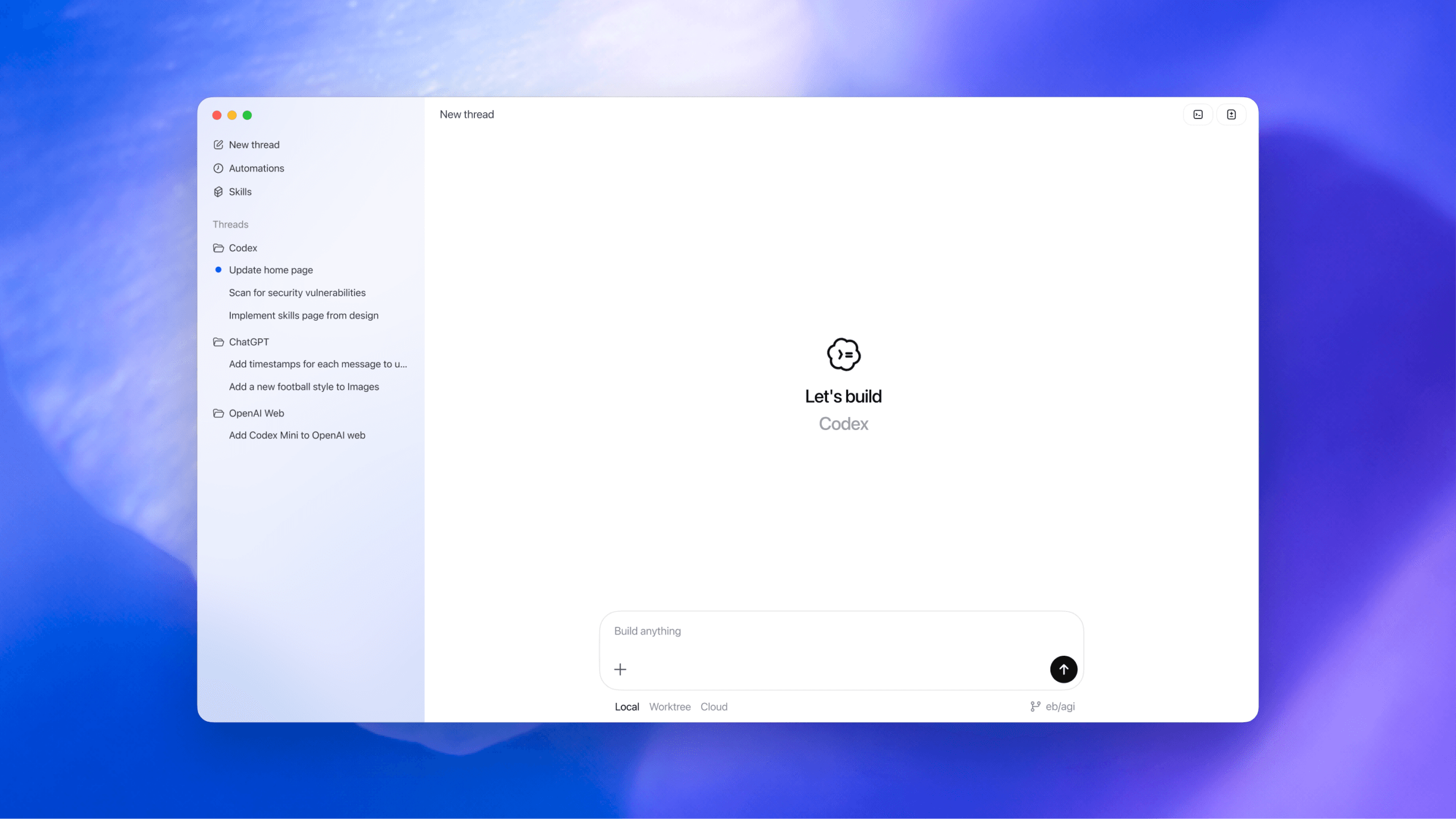
According to a report from tech commentator @kimmonismus, OpenAI is undertaking a significant pivot with its desktop software. The company is transforming its existing Mac Codex app—originally a tool for AI-powered code completion and assistance—into a unified, general-purpose AI platform internally referred to as a "Superapp."
The new platform aims to combine several distinct AI capabilities into a single, more user-friendly Mac application:
- Chat Interface: A primary conversational chat experience.
- Agent Workflows: Support for multi-step, automated AI agent tasks.
- Multimodal Capabilities: The ability to process and generate text, images, and potentially other data types.
- Flexible Model Control: User control over which AI model (e.g., GPT-4, o1) powers different tasks.
This evolution represents a strategic shift from a niche developer tool to a broad-based consumer and professional productivity application, directly on the desktop.
What's New: From Code Assistant to AI Hub
The original Mac Codex app, launched as a free download in 2024, was a lightweight, native macOS application focused squarely on developers. It provided quick access to OpenAI's Codex model for code generation and explanation directly within the user's workflow, separate from the ChatGPT web interface.
The reported "Superapp" rebrand suggests a fundamental expansion of scope. Instead of just code, the application is being re-engineered as a central hub for all forms of AI interaction. The integration of agent workflows is particularly notable, pointing to functionality where users could set up persistent, automated AI assistants for complex tasks like data analysis, content scheduling, or research aggregation.
Technical Implications & User Experience
By consolidating chat, agents, and multimodal tools, OpenAI is attempting to reduce the friction of switching between different AI products and web tabs. A unified desktop app could offer:
- System-Level Integration: Deeper access to macOS features, files, and notifications.
- Persistent Context: Long-running agent sessions that remain active and context-aware.
- Performance Benefits: Potential for lower latency compared to web-based tools.
The mention of "flexible model control" suggests users may be able to select different OpenAI models (like the reasoning-focused o1 series for complex tasks and the faster GPT-4o for casual chat) for different purposes within the same app, a feature currently more cumbersome to manage.
Competitive Context: The Desktop AI Race
This move places OpenAI in more direct competition with other companies building integrated desktop AI experiences.
- Microsoft: With its Copilot+ PC initiative and deep Windows integration, Microsoft is embedding AI across the operating system.
- Google: While web-centric, Google's Gemini apps and ChromeOS integrations offer a similar unified approach.
- Startups: Companies like Rewind AI and Arc browser's AI features are creating personalized, ambient desktop AI experiences.
OpenAI's advantage is its model portfolio. Packaging its best models into a sleek, native Mac app could be a compelling alternative to platform-dependent solutions, especially for users who prioritize model performance over OS-level integration.
What to Watch: Availability and Strategy
The source does not provide a release timeline. Key questions remain:
- Will this remain a Mac-exclusive, or will Windows and Linux versions follow?
- What will the pricing model be? The original Codex app was free. A "Superapp" with advanced agent capabilities might align with a ChatGPT Plus subscription or a new tier.
- How open will the agent workflow system be? Will users be able to build custom agents or install pre-made ones?
This development follows OpenAI's pattern of expanding its surface area from pure API and web chat to more integrated products, as seen with the ChatGPT desktop app for macOS released in 2024.
gentic.news Analysis
This pivot is a logical, almost inevitable, step in OpenAI's product evolution. For years, the company's primary interfaces have been the ChatGPT website and its API. The Mac Codex app was a tentative first step into dedicated desktop software. Transforming it into a "Superapp" represents a full commitment to this channel, recognizing that heavy AI users—especially developers and knowledge workers—operate primarily within desktop environments and need persistent, powerful tools.
Technically, this aligns with the industry-wide shift towards AI agents. As we covered in our analysis of Google's Project Astra and Microsoft's AutoGen, the frontier is moving from single-turn chat to persistent, goal-oriented agents. A dedicated desktop app is the ideal sandbox for such agents, with potential access to local files, calendars, and other applications. OpenAI's challenge will be to make agent creation and management simple enough for non-experts.
From a competitive standpoint, this is a defensive and offensive move. It defends against Microsoft's deep OS integration by offering a best-in-class, cross-platform (if currently Mac-only) experience that is tied to OpenAI's superior models rather than Windows. It offensively challenges a host of startups building single-purpose AI desktop tools by offering a consolidated, model-agnostic hub. If successful, the OpenAI Superapp could become the Home Screen for AI on the desktop, controlling which model or agent handles which task. The risk is diluting the focused utility of the original Codex app and creating a bloated interface. Execution on the "user-friendly" promise will be critical.
Frequently Asked Questions
What was the original OpenAI Mac Codex app?
The original Mac Codex app was a free, lightweight native application for macOS released by OpenAI in 2024. It was designed primarily for developers, providing quick access to AI-powered code completion, explanation, and generation directly from the menu bar or via a keyboard shortcut, without needing to use the ChatGPT web interface.
What is an AI "Superapp" in this context?
In this context, an AI "Superapp" refers to a single desktop application that consolidates multiple modes of AI interaction that are currently separate. This includes basic chat, advanced multi-step AI agent workflows, multimodal features (vision, voice), and the ability to easily switch between different underlying AI models (like GPT-4o or o1) based on the task.
How is this different from just using ChatGPT in a web browser?
A native desktop "Superapp" can offer deeper integration with your computer's operating system. This means potentially faster performance, the ability for AI agents to work with your local files securely, system-wide keyboard shortcuts, and persistent background processes. It moves AI from being a website you visit to a fundamental tool embedded in your desktop workflow.
When will the OpenAI Superapp be released?
The source report from @kimmonismus does not include a release date or timeline. The development appears to be an ongoing transformation of the existing Mac Codex app. Announcements regarding beta access or a public launch would likely come directly from OpenAI through their official blog or social channels.