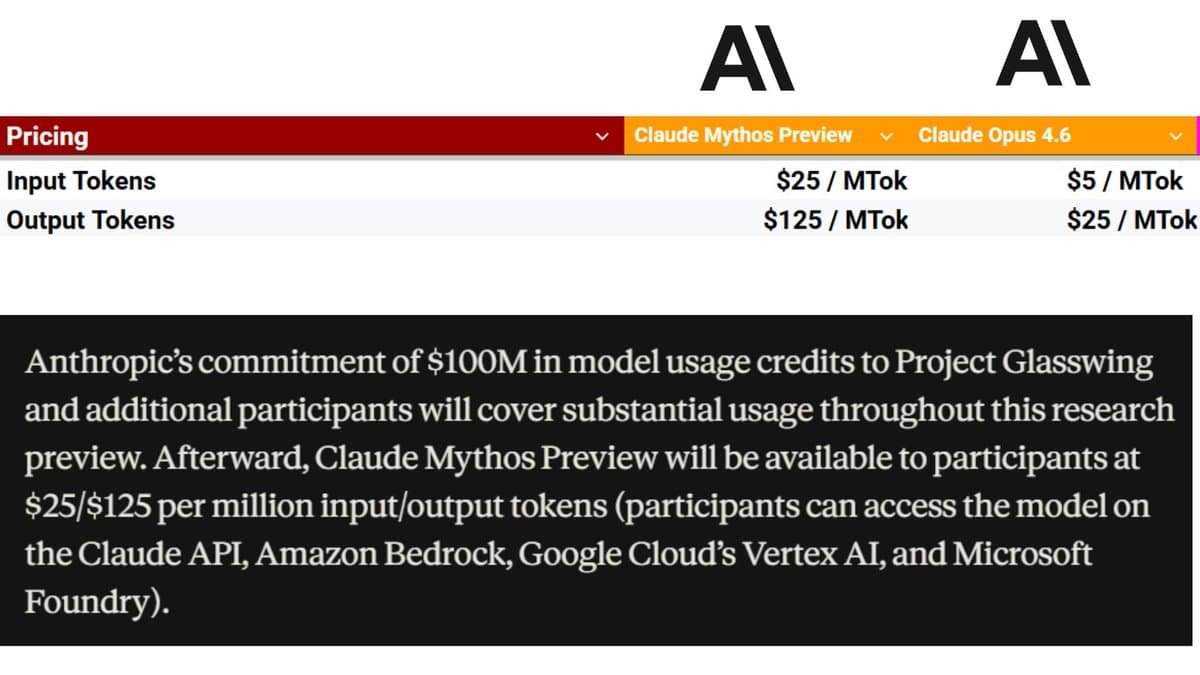
A recent pricing reveal for Anthropic's upcoming Claude Mythos model has drawn attention for its steep premium over the company's current flagship offering. According to details shared online, Claude Mythos will be priced at approximately five times the cost of Claude Opus 4.6, the most capable model in Anthropic's current lineup.
What Happened
The pricing information surfaced via a social media post from a user analyzing published benchmark data. The core observation is straightforward: Claude Mythos carries a significantly higher per-token price than Opus 4.6. While the exact input/output token prices were not detailed in the source, the 5x multiplier is the key takeaway.
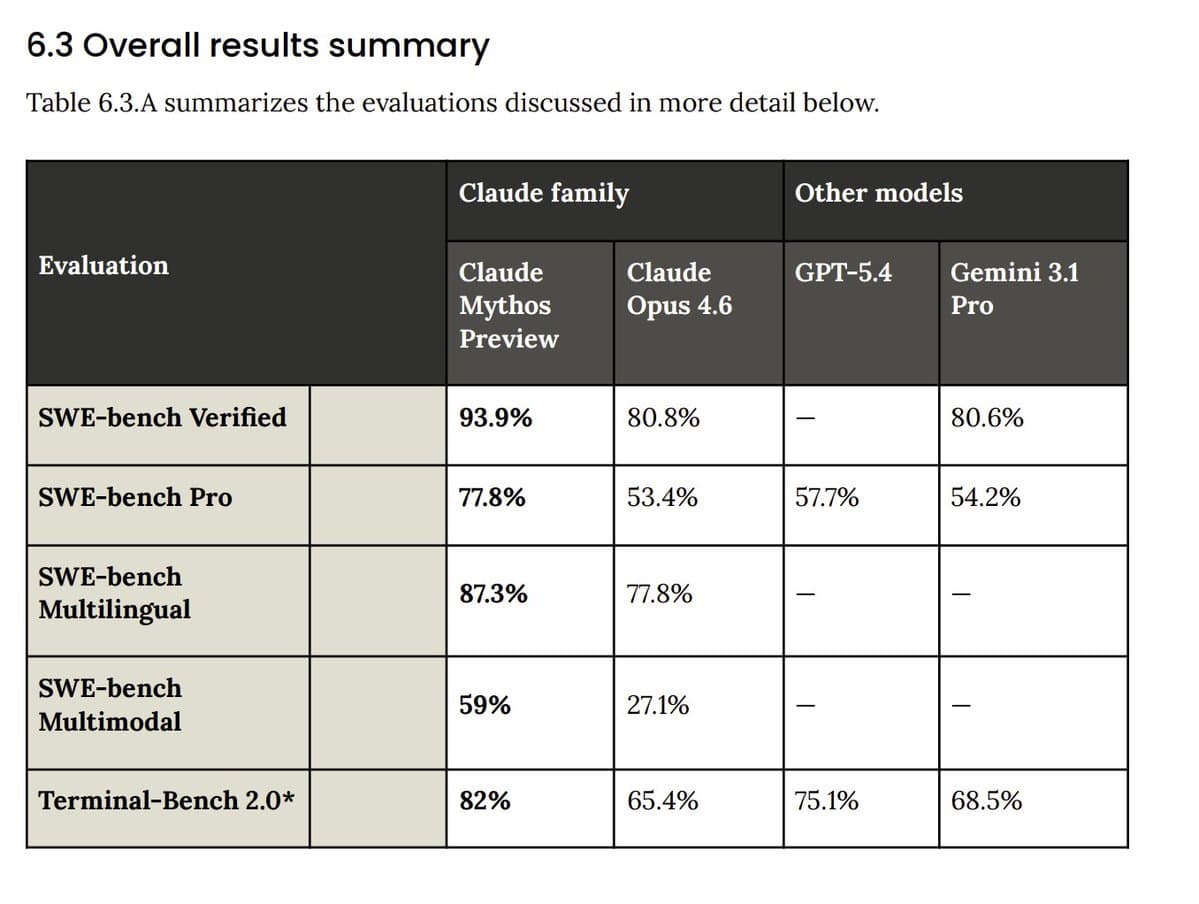
The poster noted that, based on the published benchmarks, they "expected much higher costs," implying that the performance improvements shown may not intuitively justify such a large price jump.
Context & The Performance Question
This pricing move is notable because it decouples raw benchmark performance from cost in a way that is uncommon for general-purpose AI model APIs. Typically, newer model generations aim to offer better performance at a similar or slightly higher price point, improving the value proposition.
Anthropic has positioned Claude Opus as its most capable model for complex tasks. Claude Mythos appears to be a new tier, possibly targeting a different set of capabilities or reliability metrics not fully captured in standard benchmarks like MMLU or GPQA. The high cost suggests Anthropic is marketing Mythos for specialized, high-stakes enterprise applications where extreme reliability, reasoning depth, or specific domain expertise outweighs cost considerations.
The Competitive Landscape
This pricing strategy places Claude Mythos in a unique bracket. For comparison:
- OpenAI's GPT-4o/4 Turbo: Priced for broad accessibility and is the default benchmark for cost-performance.
- Google's Gemini Ultra: Competes directly with Opus on the high-end capability tier.
- Claude Opus 4.6: Serves as Anthropic's flagship for most advanced tasks.
By introducing a model 5x more expensive than Opus, Anthropic is creating a new, ultra-premium category. This could be aimed at verticals like advanced scientific research, complex financial modeling, or mission-critical legal analysis, where users are willing to pay a substantial premium for marginal but crucial improvements in accuracy or reasoning.
What This Means for Developers
For most developers and companies, Claude Opus 4.6 (or the cheaper Sonnet/Haiku models) will remain the pragmatic choice. The cost delta is simply too large to justify for all but the most specific, high-value use cases where failure is extraordinarily expensive.
The launch of Mythos signals that the frontier AI market is segmenting. Instead of a single "best" model, providers are offering a portfolio tiered by both capability and price, targeting different customer budgets and risk tolerances.
gentic.news Analysis
This pricing reveal for Claude Mythos is a significant data point in understanding Anthropic's evolving business strategy. It follows the company's series of major funding rounds that valued it in the tens of billions, placing immense pressure to build a sustainable, high-margin revenue stream. A 5x price premium on a new model is a clear move to monetize its most advanced research directly, rather than solely competing on the cost-performance curve with OpenAI and Google.
This aligns with a trend we've noted: the stratification of the AI model market. Earlier this year, we covered DeepSeek's release of its V3 model, which competed aggressively on performance-per-dollar. Anthropic's move with Mythos is the inverse—prioritizing margin and niche capability over broad affordability. It suggests that for leading labs, the path to profitability may involve creating "boutique" models for enterprise clients alongside more accessible general-purpose ones.
The key question for practitioners is whether the underlying technology in Mythos—potentially involving massive scale, novel architectures like the Claude 3.5 Sonnet's "Artifacts" feature, or unprecedented reasoning depth—represents a true architectural leap that will eventually trickle down to lower-cost models, or if it's an economically optimized product for a specific clientele. The muted reaction to its benchmarks indicates the community is skeptical of a paradigm shift, viewing it more as a refined tool for a particular job.
Frequently Asked Questions
How much does Claude Mythos cost compared to Opus?
Claude Mythos is priced at approximately five times (5x) the cost per token of Claude Opus 4.6. Exact pricing per million tokens has not been officially detailed in this source.
Why is Claude Mythos so much more expensive?
While not explicitly stated by Anthropic, a 5x price premium suggests Mythos is targeting specialized, high-value enterprise applications where extreme reliability, depth of reasoning, or specific domain expertise is critical. The cost reflects a focus on margin and serving niche use cases rather than winning on raw performance-per-dollar.
Should I use Claude Mythos over Opus?
For the vast majority of developers and use cases, no. The cost differential is too large to justify for general tasks. Claude Opus 4.6, Sonnet, or Haiku will offer far better value. Mythos is likely only economical for applications where a marginal increase in accuracy or reasoning capability has an outsized financial or operational impact.
Has Anthropic officially launched Claude Mythos?
This source discusses pricing and benchmarks that have been revealed, suggesting details are circulating ahead of or during a launch phase. Readers should check Anthropic's official blog and documentation for the final launch status, official pricing, and full capability details.