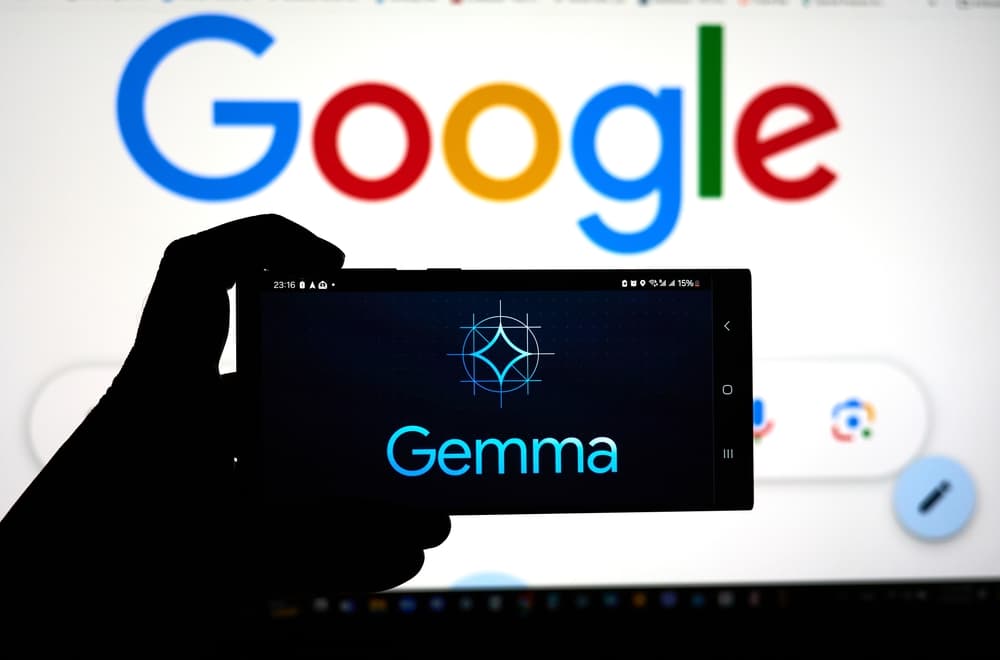
A developer has successfully demonstrated Google's 4-billion parameter Gemma language model running on a Nintendo Switch, achieving approximately 1.5 tokens per second inference speed. This marks a significant milestone in edge AI deployment, showing that moderately-sized language models can now run on consumer gaming hardware originally released in 2017.
The demonstration, shared by developer Kimmo on X (formerly Twitter), shows the Gemma 4B model running locally on the Switch's NVIDIA Tegra X1 system-on-chip. The achievement follows the long-standing "can it run Doom?" tradition in computing circles, where developers test the limits of hardware by porting the classic game to unconventional platforms.
What Happened
Kimmo's demonstration shows Google's Gemma 4B model running entirely locally on a Nintendo Switch, without cloud connectivity or external processing. The model generates text at approximately 1.5 tokens per second, which while not suitable for real-time conversation, demonstrates the technical feasibility of running modern language models on constrained hardware.
The Nintendo Switch uses NVIDIA's Tegra X1 chip, featuring a 4-core ARM Cortex-A57 CPU and a 256-core Maxwell-based GPU with 4GB of shared LPDDR4 memory. Running a 4-billion parameter model on this hardware represents a significant engineering achievement in model optimization and deployment.
Technical Context
Google's Gemma models are part of the company's open-weight family of language models, with the 4B parameter version being one of their smaller offerings. The model uses similar architecture to Google's larger Gemini models but is optimized for efficiency and deployment on resource-constrained devices.
Running LLMs on edge devices presents several challenges:
- Memory constraints: The Switch's 4GB RAM must accommodate both the operating system and the model weights
- Computational limits: The Tegra X1's CPU and GPU were designed for gaming, not transformer inference
- Power management: The Switch's battery-powered operation requires efficient energy use
What This Means in Practice
While 1.5 tokens/second is too slow for practical applications, this demonstration proves the concept of running modern language models on consumer gaming hardware. The achievement suggests that:
- Future gaming consoles could potentially include AI coprocessing capabilities
- Smaller, more efficient models could enable offline AI features in portable devices
- The barrier to entry for edge AI deployment continues to lower
gentic.news Analysis
This demonstration represents the natural progression of the "can it run Doom?" phenomenon into the AI era. Where developers once tested hardware limits with a 1993 game engine, they now benchmark with billion-parameter neural networks. The shift reflects how AI inference has become a new standard for measuring computational capability.
Google's Gemma family, launched in February 2024, was specifically designed for this type of deployment scenario. The models use techniques like weight quantization, efficient attention mechanisms, and optimized kernels to run on consumer hardware. This Nintendo Switch demonstration validates Google's approach to creating models that balance capability with deployability.
The timing is particularly interesting given Nintendo's next-generation console rumors. If the current Switch can run a 4B parameter model at 1.5 tokens/second, a hypothetical Switch 2 with more modern silicon could potentially run similar models at usable speeds. This opens possibilities for AI-enhanced gaming experiences without cloud dependency.
This development also connects to broader trends in edge AI deployment we've covered previously, including Apple's on-device AI strategy with their Neural Engine and Qualcomm's push for AI-optimized smartphone chips. The Nintendo Switch demonstration shows that even gaming-focused silicon from 2017 can handle modern AI workloads with sufficient optimization.
Frequently Asked Questions
Can I run Gemma on my Nintendo Switch right now?
No, this is a custom development project requiring specialized tools and modifications. The developer likely used homebrew software and custom model loading techniques not available to standard Switch users.
Is 1.5 tokens/second useful for anything?
At that speed, the model generates about 90 tokens per minute, making it impractical for interactive applications. However, it demonstrates technical feasibility and could be useful for batch processing or educational purposes where speed isn't critical.
How does this compare to running models on smartphones?
Modern flagship smartphones with dedicated AI accelerators can run similar-sized models much faster. For example, recent iPhone and Android devices with neural processing units can achieve 10-50 tokens/second for 4B parameter models, making them more suitable for practical applications.
What are the implications for future gaming consoles?
This demonstration suggests that next-generation consoles could potentially include AI coprocessors or enhanced neural capabilities. This could enable features like real-time NPC dialogue generation, adaptive gameplay, or enhanced graphics upscaling without cloud connectivity.