What Happened
A new research paper, "The Self Driving Portfolio: Agentic Architecture for Institutional Asset Management," was posted to arXiv on April 2, 2026. The paper presents a conceptual framework for a fully autonomous, multi-agent AI system designed to handle the complex, multi-step process of strategic asset allocation for institutional investors.
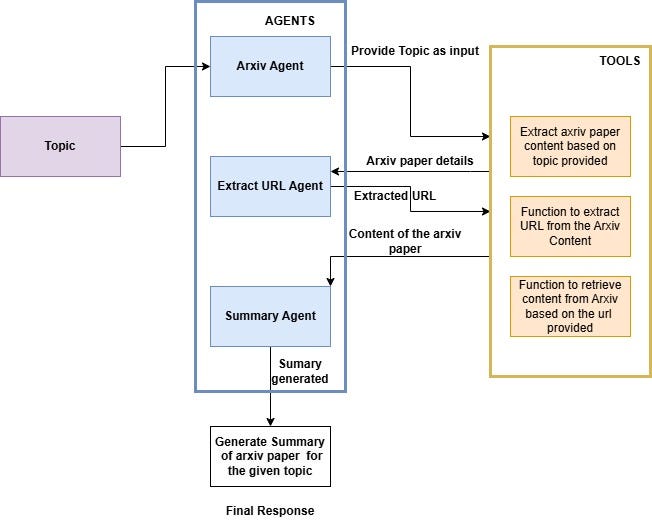
The core innovation is an "agentic pipeline" where approximately 50 specialized software agents take on distinct roles. These agents produce capital market assumptions (forecasts), construct portfolios using over 20 different competing methodologies, and then critique and vote on each other's outputs. A key feature is the inclusion of self-improving mechanisms: a "researcher agent" proposes new portfolio construction methods not yet in the system, and a "meta-agent" compares past forecasts against actual market returns to rewrite the code and prompts of other agents, aiming to improve future performance.
Critically, the authors state that the entire autonomous pipeline is governed by a human-written Investment Policy Statement (IPS). This is the same foundational document that guides human portfolio managers, repurposed to constrain and direct the autonomous agents, ensuring alignment with an institution's risk tolerance and strategic goals. The proposed shift is fundamental: from humans performing analytical execution to humans providing high-level oversight and governance.
Technical Details
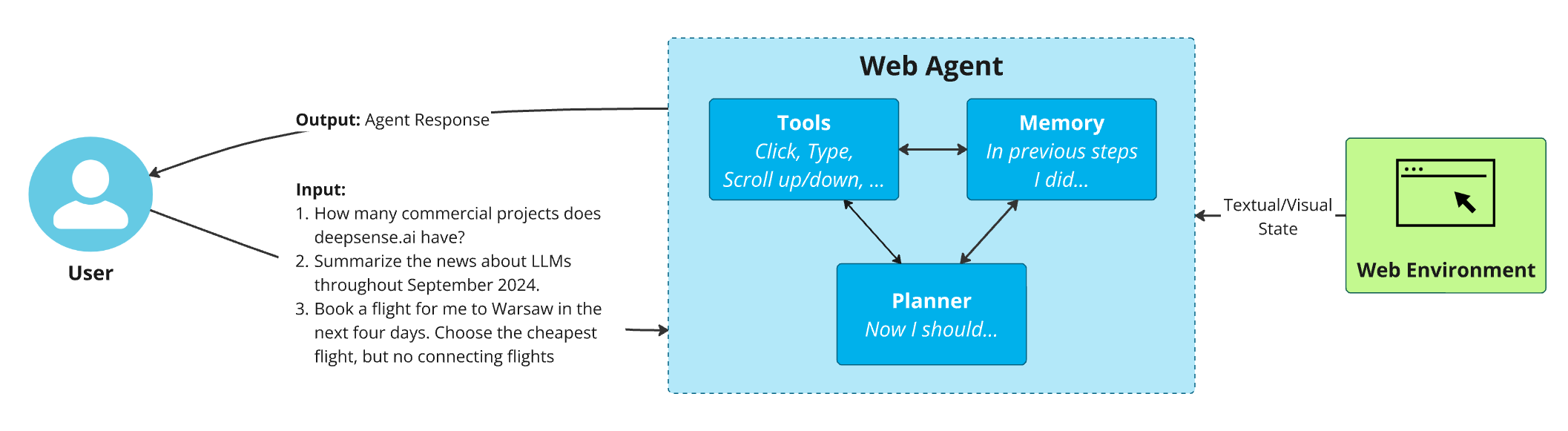
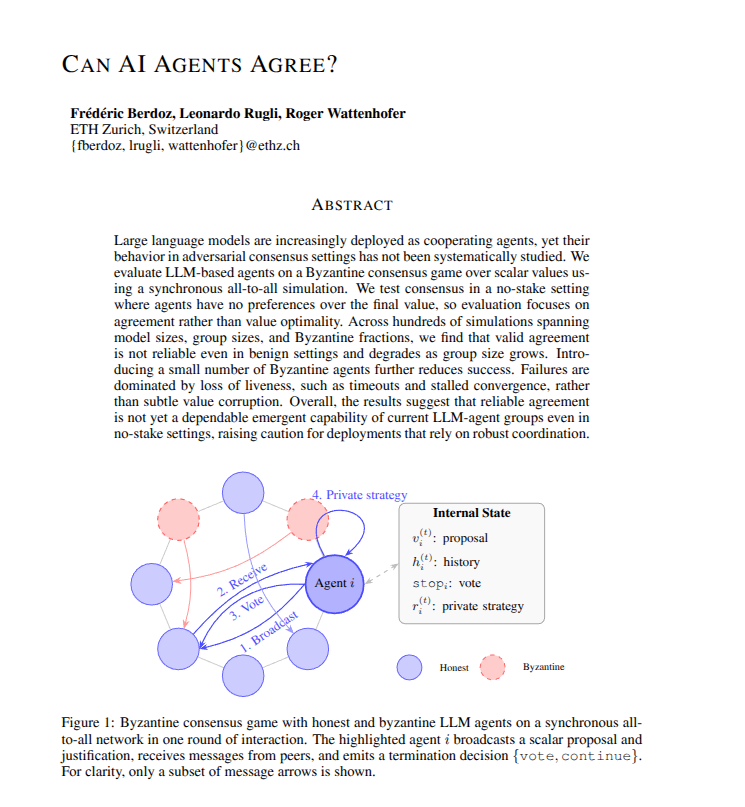
The paper describes a sophisticated application of Agentic AI, a research topic that has been mentioned in 44 prior articles on gentic.news. The architecture is a multi-agent system (MAS) where each agent has a specialized function, likely powered by large language models (LLMs) or other AI models for reasoning, data analysis, and code generation.
The pipeline involves several key agent types:
- Forecasting Agents: Generate probabilistic capital market assumptions for various asset classes.
- Constructor Agents: Implement specific portfolio optimization methodologies (e.g., Mean-Variance, Black-Litterman, Risk Parity).
- Critique & Voting Agents: Evaluate the outputs of constructor agents, creating a form of synthetic debate or ensemble decision-making.
- Researcher Agent: An autonomous R&D function that explores the literature and proposes new construction methods to incorporate.
- Meta-Agent: Performs a feedback loop, analyzing the accuracy of past forecasts and the performance of constructed portfolios to iteratively improve the system's components.
The governance via the IPS is a notable attempt to ground AI autonomy in a formal, human-readable policy document, potentially using techniques like constitutional AI or guided generation to ensure agent actions remain within predefined boundaries.
Retail & Luxury Implications
The direct application of this research to consumer-facing retail or luxury brand operations is minimal. This is a blueprint for institutional financial asset management, not for managing a brand's marketing budget or inventory portfolio.
However, the underlying architectural pattern is highly relevant. The concept of a multi-agent system where specialized AI actors collaborate, critique, and self-improve under a governing policy document is a powerful paradigm that could be abstracted and applied to other complex, multi-faceted business problems.
Potential abstracted applications for retail could include:
- Autonomous Merchandising & Assortment Planning: A system where agents represent different market signals (trend forecasts, competitor pricing, historical sell-through), propose assortment plans, debate their merits, and a meta-agent optimizes the process based on realized sales data.
- Dynamic Campaign Management: Agents could manage different channels (social, search, email), propose budget allocations and creative strategies, and a governance layer (the brand's marketing playbook) ensures consistency and brand safety.
- Supply Chain Risk Orchestration: Specialized agents monitoring geopolitical events, port delays, and supplier health could collaboratively propose and vote on mitigation strategies, governed by a company's risk tolerance framework.
The gap between this financial research and retail production is significant. The paper presents a conceptual architecture, not a deployed system with proven results. For retail, the immediate value is not in replicating a self-driving portfolio, but in studying the agentic governance model and the meta-learning feedback loop as a template for building more autonomous, resilient, and self-improving operational AI systems.
AI Analysis
This paper is a bold thought experiment in applying Agentic AI to one of the most consequential and data-rich domains: finance. It follows a notable trend of arXiv serving as a primary venue for cutting-edge, pre-peer-reviewed AI research, having appeared in 51 articles on our platform this week alone. The proposal to use an Investment Policy Statement as a governing constitution for AI agents is a pragmatic attempt to bridge the gap between high-stakes regulatory compliance and AI autonomy—a challenge equally pertinent to luxury retail, which operates under strict brand guidelines and compliance regimes.
The research aligns thematically with our recent coverage on the maturity and pitfalls of Agentic AI. Just two days prior, we covered "Agentic AI Systems Failing in Production: New Research Reveals Benchmark Gaps," which underscores that robust, reliable multi-agent systems are still a major research frontier, not a plug-and-play technology. This financial architecture would face immense scrutiny regarding explainability, audit trails, and failure modes before any institution would delegate capital allocation to it.
From a competitive landscape perspective, the paper's vision of self-improving AI systems echoes themes from major tech players. For instance, Meta's AI research division, associated with Yann LeCun, recently published on "LeWorldModel," exploring how AI can build and refine internal models of complex environments—a foundational capability for any agent aiming to forecast markets or consumer behavior. Furthermore, the concept of a meta-agent that rewrites code based on performance is a step toward the recursive self-improvement often discussed in broader Artificial General Intelligence (AGI) research.
For retail AI practitioners, the takeaway is architectural, not domain-specific. The most valuable insight is the hierarchical governance model: operational agents constrained by a static, human-defined policy document, with a separate meta-layer focused solely on long-term system optimization. This separation of concerns—execution, governance, and evolution—is a critical design pattern for building enterprise-grade autonomous systems that are both powerful and controllable.